How to Design a Product for Metal Fabrication: Tips for Success
Post Image
Image
Designing a new product is exciting, but when it requires sheet metal, such as aluminum or stainless steel, early decisions can significantly affect cost, lead time, and manufacturability. Many entrepreneurs and product designers ask how to design a metal-fabrication product that balances performance with production realities. This article outlines key considerations to help you design a product that can be fabricated efficiently, scaled reliably, and brought to market with confidence.
Understanding How To Design a Product for Metal Fabrication
Image
Metal fabrication is a precise, process-driven discipline. Modern sheet metal fabricators operate advanced equipment, follow strict quality standards, and rely on well-defined inputs to produce consistent results. While early concepts may start as sketches or rough ideas, successful metal products are developed with fabrication requirements in mind from the beginning.
Understanding how to design a product for metal fabrication means recognizing how material choice, forming methods, tolerances, and finishes influence both feasibility and cost.
Use CAD to Translate Concepts Into Fabrication-Ready Designs
One of the most important steps in designing a product for metal fabrication is creating accurate digital drawings. CAD models allow fabricators to evaluate geometry, bending sequences, tolerances, and assembly requirements before any material is cut.
Even early-stage models provide valuable insight into how a part will be formed and assembled. Clear drawings reduce back-and-forth, improve quoting accuracy, and help engineering teams identify potential issues before they become costly changes.
Plan for Prototyping and Validation
Prototyping plays a critical role in product development. Early prototypes allow designers to validate fit, function, and performance before committing to full production. When designing for metal fabrication, prototypes help confirm material selection, verify tolerances, and evaluate assembly methods. They also provide an opportunity to refine designs based on real-world feedback. This step helps reduce risk and ensures that when production begins, the design is ready to scale.
Select Materials With the End Environment in Mind
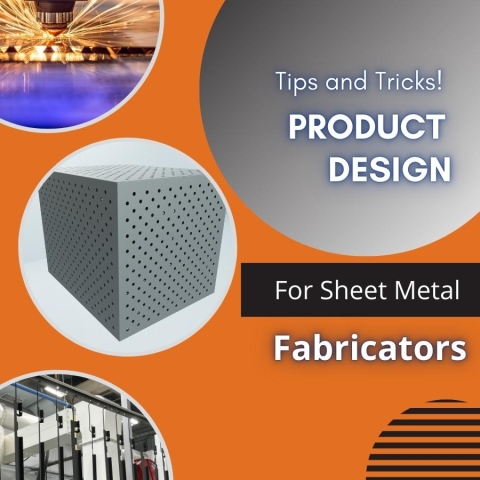
Material selection is a key factor in designing a product for metal fabrication. The operating environment should guide these decisions. Carbon steel may be suitable for indoor applications where cost efficiency is a priority. Perforated metal may be required to ensure proper airflow in data centers. Safety grating might be necessary for outdoor or corrosive environments. Each material behaves differently during cutting, forming, welding, and finishing, so selecting the right one early helps avoid redesigns later.
Consider Volume and Long-Term Production Needs
Design decisions should align with expected production volumes. A design intended for low-volume runs may differ from one that must scale to thousands of units. Understanding your target market and expected demand helps determine the right fabrication approach. Some fabricators specialize in prototyping, while others are equipped to support repeatable, high-volume production. Designing with scalability in mind helps ensure a smooth transition from prototype to production.
Engage Your Sheet Metal Fabricator Early
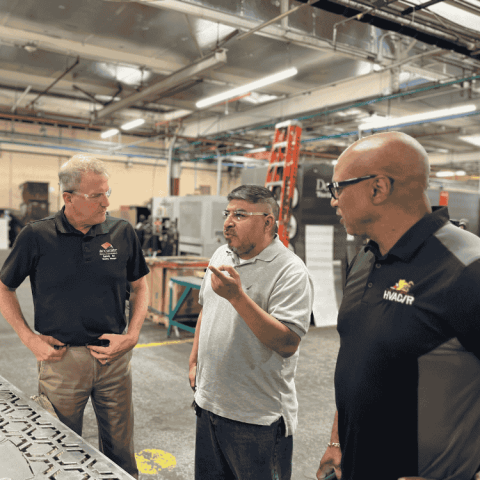
One of the most effective ways to learn how to design a product for metal fabrication is to involve a fabricator early in the process. Experienced fabricators provide design-for-manufacturability input that can reduce cost, simplify assembly, and improve consistency.
Engineering teams often suggest adjustments to bend geometry, weld placement, material thickness, or finish selection to improve efficiency. This collaboration helps ensure your design performs well not only on paper but also on the production floor.
Image
Partnering With Accurate Metal Fabricating
Designing a product for metal fabrication requires planning, collaboration, and the right expertise. At Accurate Metal Fabricating, we support customers throughout the design and production process, from early engineering input through fabrication, finishing, and delivery.
With advanced equipment, experienced engineers, and project management under one roof, we help ensure products are designed for efficiency, quality, and repeatability. Our team works closely with you to turn designs into reliable, production-ready components.
Bring Your Design to Life With Confidence
Understanding how to design a product for metal fabrication helps reduce risk, control costs, and accelerate time-to-market. With the right preparation and the right partner, your product can move smoothly from concept to production.
If you are developing a new product and need guidance on metal fabrication design, Accurate Metal Fabricating is ready to help. Contact our team to discuss your project and take the next step toward production.