Accurate Was Featured In The Fabricator
Post Image
Image
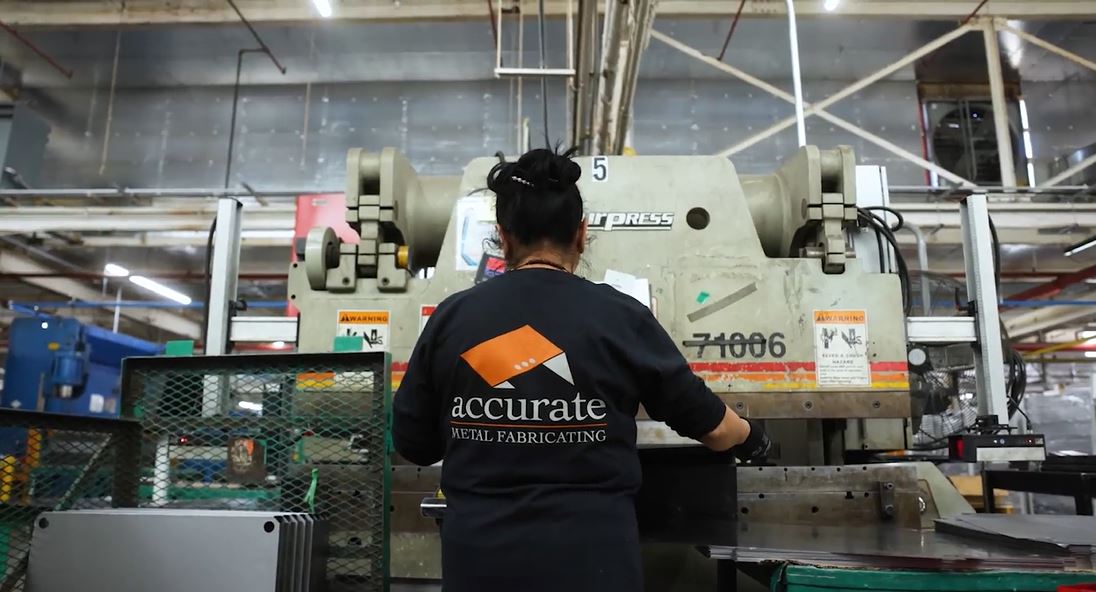
a woman forming metal with a press brake

Reprinted and Modified From The Fabricator

Accurate Perforating doesn't just make holes anymore. It provides entire perforated and fabricated sheet metal components. The 200-employee Chicago manufacturer has done much to stand out in a consolidated sector.

The perforating industry once consisted of numerous small players clustered around Chicagoland and Pennsylvania. The shops were initially founded to serve the agricultural equipment needs and (especially in Pennsylvania) mining sectors. But over decades, the business changed. The perforation process itself had become viewed as a commodity service, and that, in turn, led to consolidation. Today, only a handful of prominent players remain, and one of them is Accurate Perforating (AP), a 200-employee operation based in Chicago.

But about a decade ago, AP started to follow a new path. Managers wanted the company to produce more than just the perforated sheet. They tried to fabricate and assemble that sheet into something larger and more complex.

Today, the company is no longer just about making holes; it's about making components that OEMs can place easily into their final assemblies and contractors can quickly install onto buildings. That's far different from what the company was right decades ago when a scrap peddler named Ralph Cohen fell in love with perforating—not for the hole-filled sheets the process produced, but what those sheets left behind.

FOR LOVE OF THE SLUGS

Before launching APC in 1942, Cohen had no intentions of becoming a perforator. He reveled in the deal—buying scrap low and selling it high—and some of his largest sources for scrap happened to be the perforation houses around Chicago.

"He was always a peddler at heart, and he became fascinated with his perforating clients because of the amount of scrap they generated," said Aaron Kamins, Cohen's grandson (on his mother's side). "He fell in love with the byproduct—the slugs that he would get from the perforators, and he said, 'You know, I could develop those slugs myself.' So he put in his first machine to generate those slugs."

During the early years, the perforation work complemented Cohen's primary scrap business, but over the years, this gradually shifted more toward perforation. APC moved into its facility in 1952 and remained a small enterprise for decades. Then, in 1982, managers jumped on an opportunity to purchase Standard Perforating, a competitor just a few miles away that had just undergone a labor dispute with its union and was struggling financially. APC moved Standard Perforating's employees and machines over to its facility. "That doubled the size of the business overnight," Kamins said, adding that in 2002, APC purchased another Chicago-based perf house, Semrow Perforated Products. 

FOOTHOLD IN FABRICATION

For decades, APC has performed shearing—and it's not an everyday shearing process, either. Some shearing occurs automatically in a separate station, connected to the press control, as the sheets emerge from the die.

Specific jobs, such as one in which each panel is a different size, each with an unperforated margin around the edge, require a secondary shearing process. A technician places pins in the last row of perforations, which stick up and allow the shearing operator to gauge off the edge of the perforation (the critical dimension) and not the edge of the blank.

Besides shearing, though, the company's fabrication offering in the 1990s was a little extensive, and it certainly didn't include comprehensive assembly or welding services. Between 2000 and 2005, Mike Beck, Vice President of Sales and Engineering, helped bring in machines to expand APC's capabilities. "Our existing customer base's demand for fabrication was growing," he said.

Then, in early 2005, came a phone call that accelerated the company's push into fabrication. It was a contractor for the new American Airlines World Gateway terminal at JFK, and he had a problem. The new concourse had thousands of perforated ceiling panels. The perforations weren't unusual—0.125-inch-diameter holes punched in 0.050-inch-thick aluminum; the holes' staggered orientation (lining up horizontally but not vertically) aided noise reduction and airflow.

Fit-up between the panels was critical, and this was what the contractor called about. Thousands of panels had arrived at the site, perforated and with edges flanged, but when they were installed, some bowed slightly. Many panels had dimensions different from what they should have been, which wreaked havoc on fit-up. On top of all this, many panels arrived at the site severely damaged.

The contractor sprung the question: Could APC provide dimensionally accurate perforated panels? One more thing—the grand opening is just 90 days away.

APC dove into the job, manufacturing 17,000 panels with acoustic backing material and the proper perf patterns that ensured noise reduction and proper airflow. It worked with a corrugated box manufacturer on the packaging so the panels would arrive at JFK without a scratch.

Most significant, at least regarding the company's evolution, was APC's work with Advanced Display, a precision sheet metal fabricator in Chicago. At the time, the fabricator focused on the point of purchase (POP) display industry (hence the fabricator's name) but contracted with different companies as well, including APC.

Advanced Display had the precision press brakes and forming expertise this job required, plus the capacity to manufacture the panels within the short lead time required. The 2- by 5-foot perforated panels required a tight dimensional tolerance in length, width, and edge-flange depth.

Working together, APC and Advanced Display churned out 170,000 square feet of perforated panels, fabricating and painting them on time to be painted and installed before the grand opening in July 2005, when then-New York City Mayor Michael Bloomberg spoke below the space-age, dramatically white ceiling of the new Terminal 9. 

HOLEMAKING ON THE LEVEL

Because the perforation press creates a large area of holes in one hit with one die, it tends to distribute forming stresses evenly, but the unequal stresses are still there, and this causes distortion. The plate that is 0.25 in. thick emerges from the perf press almost in a half-moon shape. It curls the entire sheet, but it curls it evenly.

By making hole-intensive patterns on the turret punch press, technicians can minimize stress by punching in different areas of the sheet, starting away from and moving toward the clamps. They use machine features that change the approach speed of the ram or use the stripper to hold the workpiece in place before the punch contacts the sheet surface. All this helps distribute the stress induced by the punching force. All the same, for many jobs, the distortion is, again, still there.

For this reason, the company sends all perforations and other hole-intensive jobs through one of seven high-powered Herr-Voss Stamco precision levelers, which equalize the stresses to produce a flat, perforated sheet. The levelers handle everything from 0.012- to 0.312-in. sheet (though thickness capability depends on material type). "We put a lot of stress into the material," Kamins said, "but we have a way of taking that stress out."

"It takes a thick, U-shaped plate, even stainless steel, that looks like we never could use it," Beck said. "We send it through our CNC levelers, and it comes out perfectly flat."

This has allowed the company to tackle hole-making work that couldn't be done without subsequent leveling. The leveling also makes the punched blanks consistently flat for downstream forming and assembly, especially for the component work that flows through Accurate Metal Fabricating. 

QUANTITY CONSIDERATIONS

When it comes to making holes, it's hard to beat a perf press's productivity. "On each stroke, we can punch up to 1,600 holes," Kamins said. You can't do that using any other technology." "This is high-speed stamping," Beck said. "Our perf presses run at 300 strokes per minute."

Multiply this by the 18 perforating presses APC has on its floor, and you get a lot of hole-making capacity. With throughput like this, perforation presses thrive on high volumes. The CNC presses can perform skip feeds, leaving a section of the strip unperforated. Some tools can have block punches to make square or rectangular cutouts within a perf pattern. But for the most part, the process's sweet spot is consistent hole patterns.

High-volume hole-making goes to the perf presses; low-volume hole-making work goes to the turret punch presses—but what about the volumes in between? "For some applications, if we cluster-punched a job on a turret press, we wouldn't have enough time in the day," Beck said. "A job may call for 150 sheets, which would take about two hours on the turret press simply because of the number of holes. And we have just five turret presses." 

BRANDING WITH HOLES

Many OEM and POP customers have approached AP about a way to design their brand logos into a perforated sheet. AP employed programmers experienced in hole-intensive jobs on the turret punch press, and programming logo shapes, while intricate, was relatively easy for them.

As Kamins recalled, "After we did this, several clients came to us with a picture and asked, 'Can you punch this?'" Kamins added that the request evolved into a service AP now calls Picture-Perf, in which the company punches holes in a pattern that creates a logo, graphic, or picture.

"We saw similar things done differently before," said Beck. "So we asked, 'What if we use different-sized holes with different open areas and spaces between those holes?'"

The pattern can be small, in the corner of one panel on a POP display, or cover a building facade. For the new apartment complex in downtown Chicago, APC is providing 51 panels, each five by 13 ft., that, when assembled, depict a giant picture of the Greek Parthenon. 

PERF PRESS QDC

Years ago, every operator at Chicago-based Accurate Perforating changed out his press differently. Now, operators work under a standardized quick-die-change (QDC) process. Pit crews stage the tools before the previous run is finished and help the operator perform the changeover.

"We built tool cabinets so that all the tools needed for the operation sit right there," said Beck. "The operator no longer needs to walk two presses down and say, 'Hey! Johnny, I need a wrench.'" 
Illinois poised to be a force in global Manufacturing

Post Image
Image
reshoring - made in the usa

In a recent Crain's Chicago Business article, "How Illinois can join manufacturing's comeback," Illinois is ranked #25 among states in manufacturing efficiency, based on the cost of capital, energy, labor, and materials. It is located near the country's center. It has access to an exceptional transportation network, including rail, air, truck, and barge on the Great Lakes and river systems, making Illinois a solid platform for building.

Labor Costs

Labor costs will remain a challenge, and an aging workforce could derail growth if these skills are not passed on to the next generation through trade schools, technical schools, apprenticeships, and other programs.

Accurate Metal Fabricating provides on-the-job training for most of our employees. All factory personnel must pass a basic skills test covering math, reading, and writing. Advanced testing includes print reading and machine operations.

What is Reshoring?

Reshoring is a business strategy and economic concept that refers to returning or relocating a company's manufacturing, production, or service operations from a foreign or offshore location to its home country. It is the opposite of offshoring, which involves moving operations to other countries to take advantage of lower labor costs or other cost-saving factors.

Reshoring is driven by various factors, including changes in economic conditions, increased labor costs in foreign countries, concerns about product quality and intellectual property protection, a desire to reduce supply chain vulnerabilities, or a commitment to supporting domestic industries and creating jobs in the home country. Companies may also decide to reshore in response to shifts in market demand, such as a desire for more localized production to meet customer preferences or shorter lead times.

In some cases, government policies and incentives can encourage reshoring to boost domestic manufacturing and economic growth. Reshoring can have both positive and negative implications, and its success depends on factors such as the specific industry, cost structure, and the company's competitive landscape.

Join the Conversation!

What is your company doing to support and develop its skilled labor? Where can people get training to secure well-paying, stable manufacturing jobs? Reach out to us today and share your thoughts.

Enhanced Electronic Documentation

Post Image
Image
electronic data interchange

Want to save time, money, and the environment? Want to receive important order information automatically? Or support our Green Initiative by reducing the use of printed materials and carbon footprint by eliminating the transportation of documents? Well, now you can. Through enhanced electronic documentation from Accurate Metal Fabricating, your company can receive the following documents electronically and directly to the appropriate contact within your organization.

  • Order Acknowledgements
  • Shipping Acknowledgements
  • Invoices

What is EDI?

Electronic Data Interchange (EDI) is a structured and standardized method for electronically exchanging business documents and information between organizations. It allows for the seamless and automated transfer of data, such as purchase orders, invoices, shipping notices, and other business-related documents, from one computer system to another. EDI replaces the need for paper-based communication and manual data entry, reducing errors and improving the efficiency of business processes.

Critical features of Electronic Data Interchange (EDI) include:

  1. Standardization: EDI uses predefined data formats and communication protocols, ensuring consistency in data exchange between trading partners.
  2. Automation: EDI systems automatically process incoming and outgoing documents, reducing the need for manual intervention.
  3. Security: EDI systems typically use secure data transmission methods, such as encryption, to protect sensitive business information.
  4. Cost savings: EDI can reduce administrative costs and processing times by eliminating paper-based processes and manual data entry.
  5. Improved accuracy: Automated data exchange reduces the risk of errors in manual data entry.
  6. Faster transactions: EDI enables more immediate document exchange, leading to quicker decision-making and improved supply chain efficiency.
  7. Increased visibility: EDI provides real-time tracking and status updates for transactions, allowing organizations to monitor the progress of orders and shipments.


Interested To Chat Further on EDI?

You can specify the person or group of people who should receive each document. This will increase communication, speed up order processing, and reduce processing costs. Contact your project manager to learn more or sign up for Order Acknowledgement and Shipping Acknowledgement.

Metal Fabrication and Customization

Post Image
Image
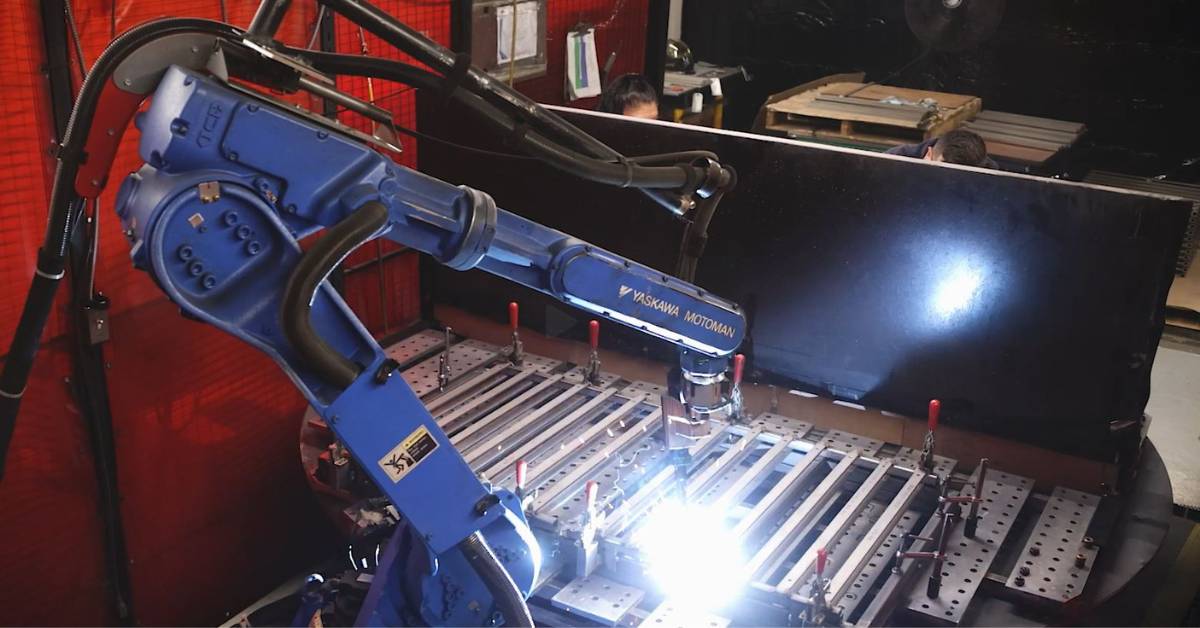
Robotic Welder Fabricating Metal

Together with our custom perforating facility, we offer a full range of metal customization and fabrication capabilities that bring your design to reality. Our capabilities range from forming and laser cutting to punching and welding. We have processes to ensure on-time deliveries and cost-effective pricing while maintaining specified quality requirements. Our production processes are expandable and flexible, with modern equipment and an experienced, caring staff ready to meet your needs, whatever they may be.

Capabilities

Accurate's capabilities span a range of metal fabrication and customization. We have over 70 years of experience manufacturing metal parts, components, and fully assembled products.

But what Accurate does goes beyond our state-of-the-art manufacturing equipment and fabricating capabilities. We ensure you feel confident throughout your project that your needs will be met on time and that we will meet all your specifications. Our decades of experience, coupled with top-tier project management that includes consistent, clear communication, ensure a positive fabrication experience from start to finish.

Metal Fabrication and Customization With Powder Coating 

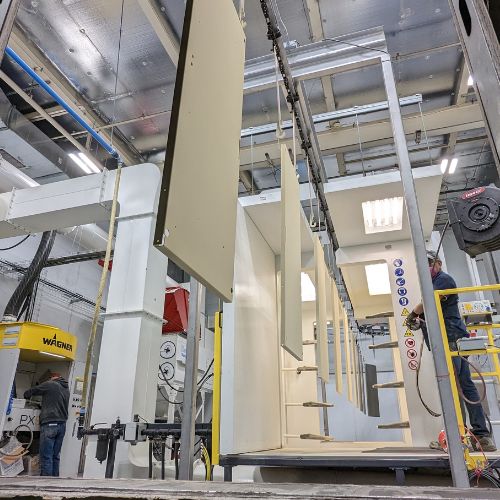
Our new state-of-the-art powder coating line is now an authorized AAMA 2603, 2604, and 2605 coatings applicator! Featuring the latest Wagner Automatic Paint Processes, all your parts are powder-coated to your specifications. And with the ability to do all your fabrication at one location, we are your one-stop shop for all your fabricated metals needs. It was also recently featured in Finishing and Coating Magazine!

Custom Metal Enclosure Capabilities

With our sheet metal enclosure fabrication capabilities ranging from precision punching and bending to robotic welding and intricate metal perforating, Accurate can provide you with quality, finished products on budget and on time. Our in-house services move your project along and ensure quality at each stage—engineering support, component assembly, finishing and labeling, storage, and fulfillment. We even have a guide to metal enclosures to make your design process easier.

AMF has been providing custom metal fabrication since 1939. Turn your design into reality by contacting us today for a quote request.

Designing & Creating Interiors+Sources' Materials Pavilion at NeoCon 2017

Post Image
Image
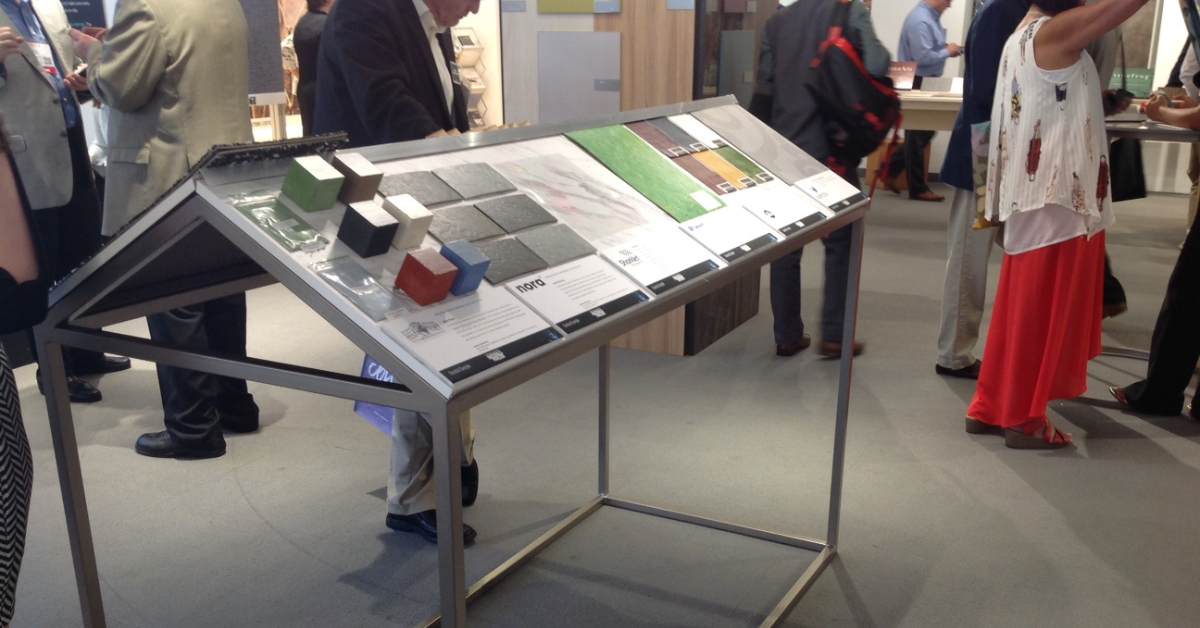
table made of astm a513 mechanical tubing

How Accurate Perforating collaborated with several other parties to bring an aspiring student's design concepts to life.

When Savanah began to develop her concept for the contest, she considered the number of people attending NeoCon and the issues that can occur with the overcrowding of spaces. Colestock explained, "My main focus was excellent circulation and to offer an open and airy space." The layout features meeting spaces via tall circular tables to facilitate discussions about the materials in the pavilion and provide an area of rest while navigating the massive show.

NeoCon 2017

Karrie Laughlin collaborated with Savanah to bring her design concept to life. Laughlin contacted numerous materials suppliers to support the initiative and settled on three very willing and capable companies, including Accurate Perforating & Metal Fabricating, to assist in the build.

Accurate worked with Karrie Laughlin, Wilsonart, and Panolite to engineer Colestock's designs. From the collaboration, Accurate and Wilsonart created a 72" long x 30" wide rectangular table designed to display material swatches at a convenient and pleasant height and angle. Accurate developed the table bases from 16ga. 1" carbon steel tubes cut, welded, ground, and then powder coated in soft gold. Wilsonart manufactured the tabletops from Calcutta Marble Solicor from .048" laminated on a ½" MDF board. The materials were joined together before Neocon 2017 by the Interiors + Sources staff.

Accurate and Wilsonart also worked together to create a 36" round wide circular table designed to provide Materials Pavilion attendees a space to converse and recuperate. Accurate made the table bases from 16ga. 1" carbon steel tubes that were cut, welded, ground, and then powder coated in soft gold. Wilsonart manufactured the tabletops from ½" Brooklyn Concrete 9219GS. Accurate also collaborated with composite panel manufacturer, Panolite, to build the large 72" H x 36" D x 11" W display towers essential in Colestock's design. Accurate constructed two-layered support bases of 1/8" carbon steel to prop up Panolite's unique presentation system. Accurate created the tower bases from 1/8" carbon steel plates that were cut, welded, ground, and powder coated in soft gold. Panolite manufactured the towers from a unique combination of ½" honeycomb cardboard core with surface board layers.

Commitment to Quality

With the commitment from Wilsonart, Panolite, and Accurate Perforating, Colestock's vision of a room with "good circulation and to offer a space that is open and airy" was brought to life.

Accurate Metal Fabricating ISO 9001:2015 Certification Updated

Post Image
Image
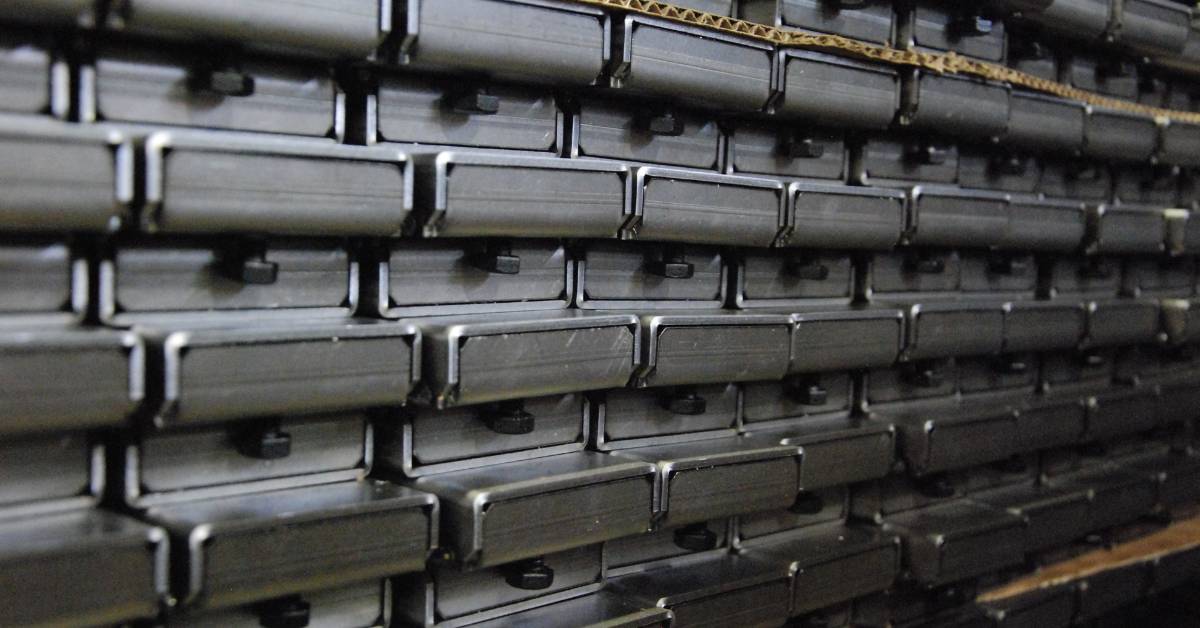
rows of sheet metal parts

On February 23rd, 2018, Accurate Perforating & Accurate Metal Fabricating received certifications of conformity to ISO 9001:2015 from American Systems Registrar, LLC (ASR) of Wyoming, Mich. The International Organization for Standardization (ISO)’s recognized management standard confirms that Accurate’s perforating and metal fabricating facilities have established a quality management system that is in conformance with the International Quality System Standard for processing perforated metal and precision fabricated sheet metal.

What Is ISO 9001:2015?

ISO 9001:2015 is a quality management system standard developed in 1987 by the International Organization for Standardization, the world’s largest developer of voluntary International Standards. The world-recognized standard creates quality management systems focused on customer satisfaction, proactive, continuous improvement, and cooperation between customers, suppliers, and employees. Certification under ISO 9001:2015 implies customers will benefit from effective and efficient production processes, resulting in safe, reliable, high-quality products.

The ISO 9001:2015 certification for our quality management system demonstrates Accurate Perforating’s and Accurate Metal Fabricating’s commitment to upholding the highest quality of our Chicago facilities. It further strengthens our position as an international leader in metal perforating and precision sheet metal fabricating. We’ve always endeavored to provide the best products and services for our customers, and this achievement reflects and recognizes our employees’ commitment and hard work to manufacture only the highest quality and performance.

The 2015 version is the latest iteration of ISO 9001 and provides a framework for organizations to establish, implement, maintain, and continually improve their quality management systems. It emphasizes a process-based approach to quality management, focusing on areas such as customer satisfaction, leadership, engagement of people, evidence-based decision-making, and relationship management with suppliers and other stakeholders.

Quality Matters

Reach out to us to learn more about our ISO 9001:2015 certification and quality management system.

Designing & Building the Materials Pavilion Display Tables

Post Image
Image
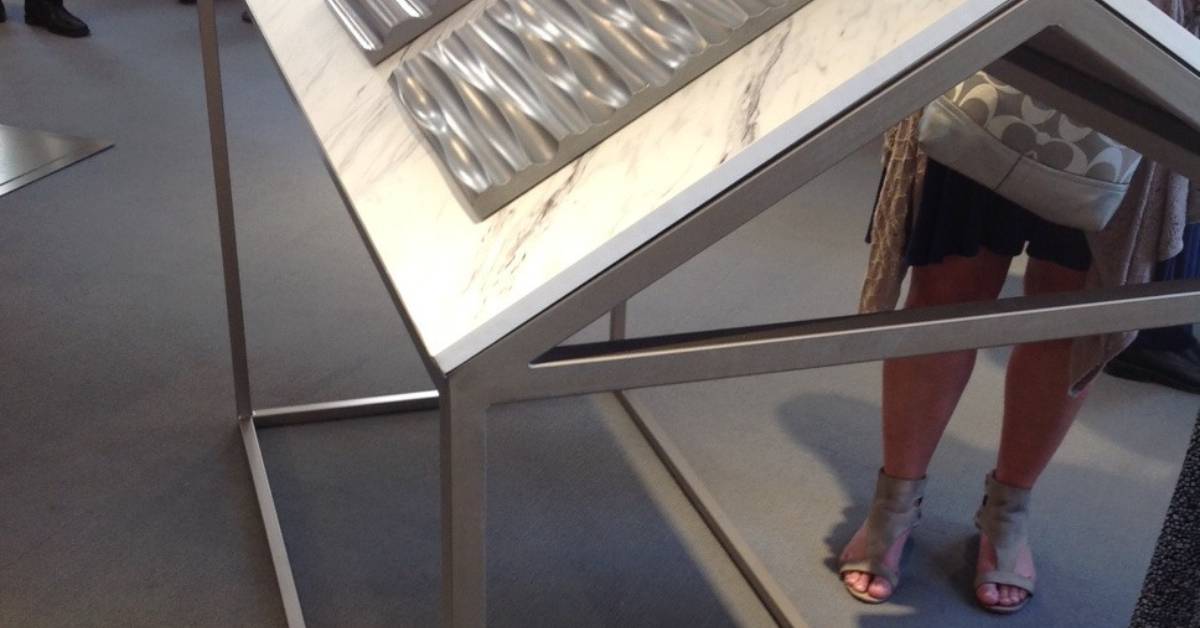
table base made of mechanical tube

When the Interiors + Sources magazine staff asked Accurate to design and build display tables again for the Material Pavilion at NeoCon, we knew that we wanted to improve the functionality and design from the prior year and surpass their presentation requirements. After considerable discussion with Interiors + Sources, our engineers, and the design team, we decided on the following requirements:

  • Display the products at an ideal level to encourage Pavilion visitors to view and touch the samples.
  • Ability to ship the display tables nearly flat, quickly assemble onsite, disassemble at the end of the event, and reuse for the next several years
  • Enhance the design of the tables so they are as appealing as the samples they are holding.
  • Securely hold up to 300 lbs of weight per table

Engineering & Project Management

Once we determined the requirements for the 2018 NeoCon display tables, our design team, engineering department, estimators, and project management team collaborated to bring them to life.

  • Design Team: We created the overall design of the display tables, choosing a cubist end-panel facade for a unique visual break.
  • Engineering - Focused on the structural requirements of each table to ensure functionality and stability. 
  • Project Management - Ensured the tables were made to the precise specifications and then packaged and shipped to arrive at Neocon 2018 on time and in perfect condition.

The end result was a reusable yet appealing display table that could show a large number of samples at an optimal height. Accurate can custom manufacture a display that fits your requirements, like a point-of-purchase display, merchandiser, or retail fixture. Come to us with just a concept or a fully developed product. We can work with you at any stage.

Design and Build Display Tables for Neocon

The display tables comprised seven distinct components designed to be assembled and quickly disassembled just with simple screws. Accurate utilized a wide range of capabilities to manufacture each component.

Flexibility in manufacturing merchandising and display components.

Accurate Perforating and its fabrication division, Accurate Metal Fabricating, has over 80 years of experience manufacturing custom point-of-purchase, merchandising, enclosures, and displays. We are aligned from project management and engineering to manufacturing and fulfillment to manufacture components for the retail and institutional industries.

Accurate Metal Fab Is A Key Supplier For An Alternative Care Facility

Post Image
Image
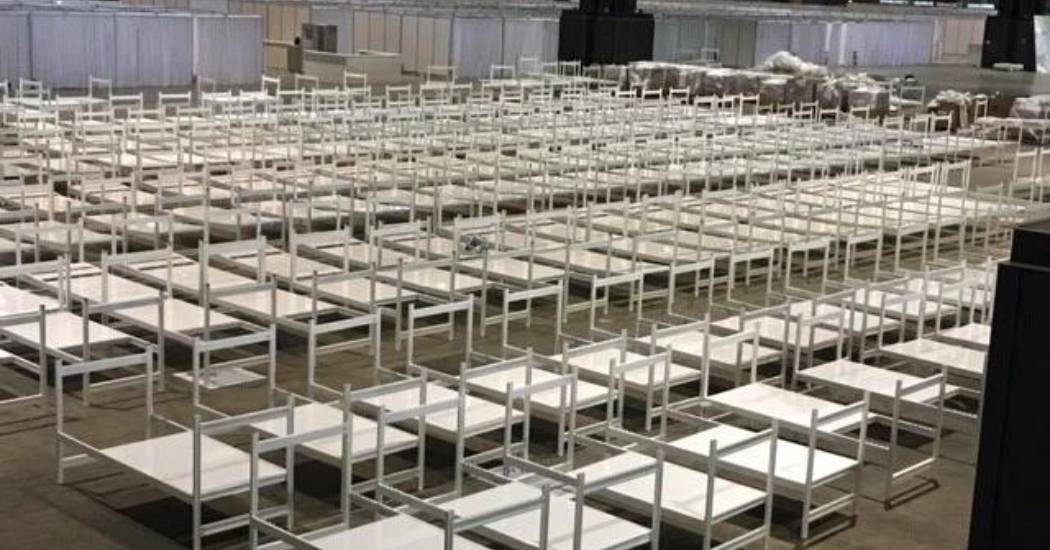
rows of beds made from metal

In 2020, Accurate Metal Fabricating became a key supplier to McCormick Place by adding a brand new product line – medical beds. In a matter of days, it has used the expertise it gained from years of custom sheet metal fabricating to retool itself into a critical supplier of rapid deployment medical beds to the Army Corps of Engineers and the City of Chicago. How they did so is yet another example of how a combination of ingenuity and determination in the face of adversity is helping to fuel our nation’s response to the COVID-19 crisis.

Taking Action

Accurate Metal Fabricating (“AMF”) and its parent company, Accurate Perforating Inc., wanted to help. AMF, located in Chicago’s 36th Ward on the near west side, has been in business continuously since 1939. Purchased by its current owners in 2006 and given its current name, AMF uses a combination of high-tech equipment and a skilled and dedicated workforce to perform precision sheet metal fabrication for customers in virtually every sector of the economy, ranging from retail to transportation, medical, and everything in between.

When plans were announced to create an alternative care facility (“ACF”) at McCormick Place, the team at Accurate started making phone calls. “We called almost everyone we knew who might have federal, state, or local connections. We had no idea what we could do to help, so we just kept asking repeatedly, what can we do?” Eventually, we hit upon the idea of providing beds to the Army Corps of Engineers for the ACF at McCormick Place. He found a phone number for the Army Corps of Engineers (USACE) and called it. An Office
The manager answered, and he pitched her on AMF’s offer to help. She responded favorably, and eventually, he worked his way up to the USACE’s Commanding General.

This started a fast-paced process in which, in the course of fewer than ten days, AMF developed a design for a “Rapid Deployment Emergency Medical Bed,” developed drawings, a manufacturing process and pricing; responded to multiple, last-minute changes in specifications, identified sources for components that needed to be outsourced (such as mattresses), assessed staffing requirements (including sources for any temporary workers who might be required); communicated with the Union who represents AMF’s workers to address any potential contractual issues; submitted a formal bid to the USACE and the City of Chicago; and continued to make and respond to design changes until and even after delivery of the first beds.

Engineering Comes To The Rescue

Although the design changed multiple times from conception to execution, the final version displayed an ingenious combination of features. “Previous designs the Corps had worked with were just a flat piece of steel with legs,” said a rep from Accurate. “But that didn’t work for COVID patients, many of whom have pneumonia and require the ability to lift their upper body. We also built an IV stand into the bed and added caster wheels. The end result was a highly functional medical bed that could be assembled in less than 5 minutes. It was hard to get to that final design, but the City and the Corps were pleased with it, and so were we.”

AMF was initially told that the Corps was looking at five different bids. On Friday, April 3, AMF learned that its bid had been accepted. But AMF was already gearing up for work. We had 25 employees here working overtime that weekend, and even before we had a signed contract, we were enormously impressed by the dedication our people showed. They saw we had a need and agreed to fill it, no questions asked. We couldn’t have done this without them.

Key Supplier to McCormick Place

The Company is incredibly proud of the team effort involved in its fantastic feat of new product development. Everyone from our CFO to our Sales, Marketing, Engineering, and Operations teams played vital roles. Even the few parts and labor we outsourced went to domestic sources. This is truly a ‘Made in USA’ product, with most of the labor performed right here in the City of Chicago, with Union labor. I was also impressed by the attitude of our employees and their Union, the Plastic Workers’ Union Local 18. Everyone displayed a fantastic can-do attitude under challenging circumstances. But in the end, everyone from the top of the Company to the folks who cleaned and sanitized our facility came through for us. I couldn’t be more proud of everyone here.

Since getting the news that its bid had been accepted, AMF’s employees have been working nearly around the clock to manufacture, assemble, and deliver about 2000 beds to the McCormick Place ACF. The Company has also launched a new division, Accurate Medical Products, to help market its beds and other related medical products. It includes partition walls that can be quickly deployed to create more hospital or medical facility space. Meanwhile, AMF delivered its first batch of parts on Wednesday, April 8, barely a week after we started pitching AMF as a source. And just two days after that, on April 10, the first of nearly 2000 beds were assembled and installed at McCormick Place.

Doing Our Part

In just ten days, we went from being a custom metal fabricator with basically no experience making medical beds to fabricating and delivering nearly 20 semi-truckloads of beds and mattresses for the McCormick Place ACF to do our part responding to the COVID-19 crisis. We even finished the project a full day and a half ahead of schedule. And now we’re getting inquiries from all over the country for medical beds and partitions for hospital rooms and other pandemic-related products. It’s a pretty fantastic story.

Sheet Metal Fabrication for Green Living Wall in McDonald's Headquarters

Post Image
Image
green living wall sheet metal fab

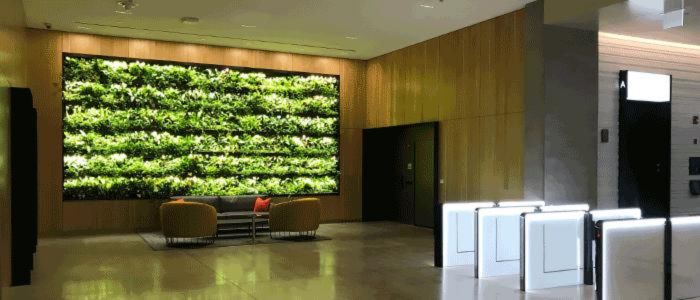
Accurate Metal Fabricating corporate with Omni Ecosystem's producing parts for their Living Shelf needs. Our clients can use our experienced engineers, services, and sheet metal fabrication capabilities for prototypes and production parts. One of the projects we worked on together was for the new McDonald's corporation lobby in Chicago.

Living Wall With Sheet Metal

Green living walls are a trend in both interior and exterior design. Studies have found many health benefits of bringing a natural connection to the work environment. Your customer can also apply for higher green standard credits if they use Metal, which is fully recyclable.

Omni Ecosystem's Living Shelf was developed explicitly for interior edible plant applications, as they do have another product for interior non-edible planting (Omni Tapestry). Unlike most interior vertical planters on the market, Omni's Living Shelf has integrated lighting, irrigation, and ventilation systems to maintain optimal plant health. It was custom-designed and built for McDonald's new headquarters.

The parts Accurate made are the main planting shelves that support the potted plants, LED lights, ventilation pipes, irrigation lines, and unit drainage pan. Each unit contains two planting rows and is roughly 4 ft wide by 1 ft 8 in tall by 1 ft 8 in deep. They hang on a metal framework and a supplemental mechanical system, including the fans, transformers, and controllers. An overall drain pan underneath the entire assembly connects the system to the building's plumbing.

Shelving Components

Accurate fabricated the shelf components, including perforation, bending, welding, and anodizing. The pieces were assembled in Omni's warehouse, and the assembled units were installed onsite by Omni's subcontractors. Accurate provided matching brackets, end panels, and connector pieces that were installed onsite. Omni also worked with Accurate's engineering during the design process to help streamline the production. Accurate produced prototype units before the mass production of the 30 units that were ultimately installed onsite.

Accurate has fabricating equipment focusing on manufacturing products. It is a one-stop shop for a company looking to increase efficiency and reduce turnaround time. You can bring Accurate Metal Fabricating in at any point in the design stage, from adding existing parts to creating a new product line. We can also sign a non-disclosure agreement with the designer to protect their confidential information.

We Are Here To Fabricate Metal

Accurate Metal Fabricating is an expert at sheet metal fabrication products such as green walls, modular panels, and roofing. Contact us for more information today!
 

Top 5 Uses for Sheet Metal in 2023

Post Image
Image
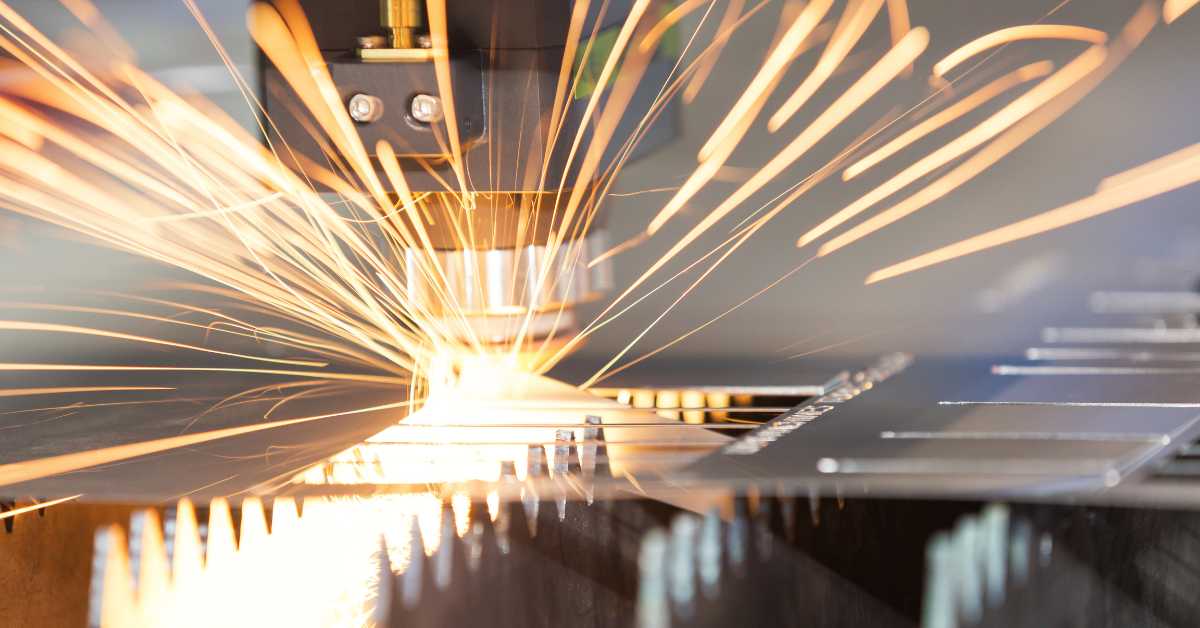
Lasering parts out of a sheet of metal

Fabricating sheet metal is the lifeblood of many fabricators across the US. In addition, these products are an essential contribution to ensuring OEMs have the right parts when needed. While sheet metal can be used in a variety of applications (and we can fabricate just about anything you can dream up), have you ever wondered what we believe are the Top 5 applications for fabricated sheet metal going into the new year? Let’s dive into the Top 5 Uses for Sheet Metal in 2023!

Enclosures

For the use of sheet metal, enclosures that are far and far away are always at the top of any application list. That’s because sheet metal and enclosures go together like peanut butter and jelly. They just work so well with one another. Enclosures can be made from various substrates – the most common being cold-rolled steel and aluminum (often used for enclosures that will be in the elements). The uses for these sheet metal applications are endless. For instance, medical enclosures are utilized for the safe disposal of drugs and needles. Lighting enclosures are designed to beautify an office building. Datacenter enclosures keep computer systems humming all day long. This is just the tip of the iceberg regarding how sheet metal will be used in enclosures for 2023.

Pop Displays

Image
top uses for sheet metal

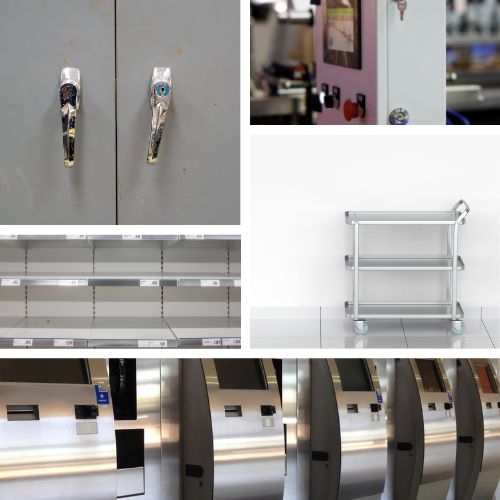
POP or point-of-purchase displays can often make or break your product's successful launch or continued promotion in retail. POP displays often feature intricate designs and laser-cut logos to ensure customers know what goods or wares you are trying to sell. Well-designed POP displays are typically built out of cold-rolled steel. The displays are robust enough to stand up to a daily barrage of customers but are still cost-effective. In addition, aluminum is also used for lighter-weight POP displays.

Cabinets

Cabinets are much like closets – you can never have enough of them. Storage is so important nowadays, so cabinets are number three on our list of sheet metal products in 2023. Cabinets are typically made from cold rolled steel. Steel is strong enough to hold the weight of the goods you need while being an economical choice and must present plenty of shelving to store all of your wares securely. We are seeing more cabinets pop up in auto garages and industrial settings as companies look to become more efficient and implement organization techniques such as 5S.

Carts

With more and more people returning to the office every day, the safety of employees has increasingly become important. Carts are going to be a hot sheet metal product in 2023. Industrial carts made from sheet metal will assist you in bringing the items you need to your workstation to do your job quickly and safely. You no longer need to move items by picking them up and walking them, which significantly risks your health and safety. Carts are designed to be functional for the job at hand. We’re seeing more and more carts in the trade show, medical and retail sectors. But even manufacturing plants, like our own, are using carts instead of overhead cranes when needed to transport smaller goods across a great distance. Most carts are being fabricated out of cold rolled steel, making them both functional and able to withstand the heavy loads thrown on them.

Kiosks

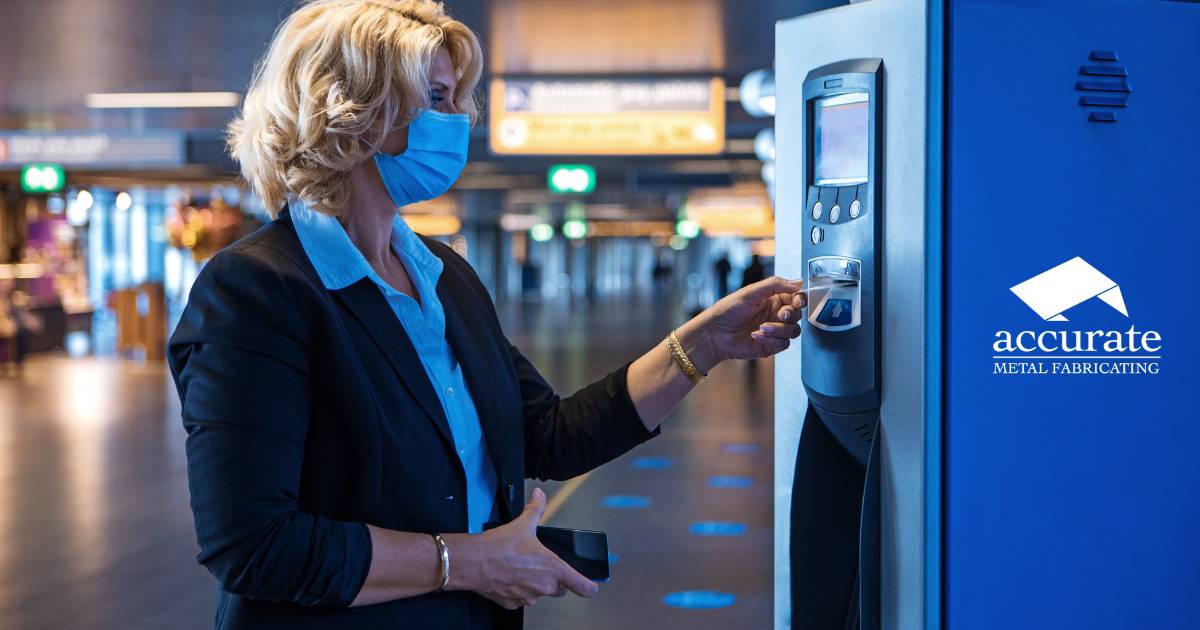
Rounding out our top 5 sheet metal uses in 2023 are Kiosks. With more and more people resuming “business as usual,” more and more kiosks are needed to keep up with the demand. Whether at the airport for you to print your luggage tags, or exiting a parking garage after a large-scale event, the demand for kiosks to automate tasks will continue to grow into 2023. Kiosks are typically made from either aluminum or cold-rolled steel, depending on where the kiosk will be in a given space.

Bringing Your Sheet Metal Design to Life

Do you have an idea that needs to be fabricated into reality from this top five list? The experts at Accurate Metal Fab are here to work with you. As a contract manufacturer, we pride ourselves on holding your products and designs to the highest standards. Our engineers can bring your napkin sketch to reality. We work with all metal types, including galvanized steel and stainless steel. We will happily work together to get your next sheet metal design to reality.

5 Different Types of Welding

Post Image
Image
Welding Metal

Having different types of welding in a metal fab shop is a give-in. If the metal fabrication shop you currently work with offers welding as a service, is it a metal fab shop? They might be, but welding is one of those "bread and butter" types of the fabrication process. But did you know that not all welding is the same? Different types of welding techniques and equipment are currently available. This two-part series will examine some of the more common weld techniques available at most fab shops, including ours. And then, we will come back to look at more advanced welding techniques in our next feature! Let's look at five different welding techniques you can use.


Stick welding

One of the earliest and most fundamental types of welding is stick welding, sometimes referred to as shielded metal arc welding (SMAW). It entails producing an arc with an electric current between a disposable electrode and the joined metal. The arc's heat melts metal, and a rod made of filler material welds the pieces together. Flux is applied to the rod, protecting the weld from the environment and possibly purging the metal of impurities. Stick welding is an easy and dependable technique. As the flux shields the weld from contamination, you find this type of welding typically in outdoor locations. It is also an excellent option for welding heavier metals because the flux can help improve a weld's penetration.


Image
different types of welding

MIG Welding

Metal inert gas welding is a common type of welding that uses a wire electrode and an inert gas to create the weld. It is a simple form of welding to master and is frequently used to join thin materials. In MIG welding, a continuous wire electrode is injected into the weld pool using a welding gun, and an electric arc melts it. The arc produces an electrical current and travels through the metal and the wire electrode. The substrate uses an inert gas, such as argon or helium, to protect itself from the atmosphere—the gas prevents oxygen and other airborne contaminants from contaminating the weld. MIG welding is a flexible and effective technique. Industries that use this technique include automotive, aerospace, and construction. Moreover, MIG welding is well-suited for thin gauge material and long, continuous welds.


Spot Welding 

Joins two or more metal sheets together using resistance welding. It exerts pressure and electrical current on the metal sheets, which heats them and causes them to melt where they come into contact. After cooling and solidifying, the molten metal forms a solid link between the sheets. The spot-welding procedure is quick. You will find spot welds in products such as cars and appliances. It works very well for welding thin metal sheets. The machinery concentrates pressure and heat on a tiny region, reducing the possibility of overheating or harming the metal. Spot welding involves clamping together one or more metal sheets and running an electrical current through them. At the point of contact, heat is generated when the current passes through the metal sheets and forms a resistance. This heat melts the metal, and as it cools, the molten metal solidifies, forging a solid bond between the sheets. The size and shape of the electrodes used to apply the current dictate the size and shape of the weld.


Robotic Welding

Robotic welding is a type of welding performed by a robot. A robot is used in an automated process to weld metal components. Compared to traditional welding processes, robotic welding offers several advantages. It fuses challenging parts for humans to reach and is faster and more accurate. Robotic welding significantly increases production efficiency by operating around the clock. This method eliminates many tedious welding processes. Heavy machinery, aircraft, and automotive industries frequently employ robotic welding.


TIG Welding

TIG welding is short for Tungsten Inert gas (TIG) welding. TIG is a more advanced form of welding that generates the weld using an inert tungsten electrode. You will find this technique when using thin materials requiring high-quality welds. A Tungsten electrode is utilized in TIG welding to generate an arc between the electrode and the metal itself. The arc's heat melts the metal, and the weld pool fills with filler material as necessary. An inert gas, such as argon or helium, protects the arc from the atmosphere. This gas aids in shielding the weld from contaminants. It may require more knowledge to perform TIG welding because it is a more complex process. It is often used for welding thin materials, such as sheet metal or tubing. In addition, welding ferrous and non-ferrous metals like aluminum and stainless steel utilize the TIG method.


Do you have a large project for which you need welding assistance? The experts at Accurate Metal Fab are here to help! We offer various metal fabrication options, including bending, forming, powder coating, and welding. Send us a quote and let us know how we can fabricate together.

Streamlining Parking: The Benefits of Parking Garage Kiosks

Post Image
Image
Woman paying at a parking garage kiosk

Parking lots and garages can be a hassle for drivers and parking operators. Drivers need to find a parking spot, while parking operators must ensure they’re making money while keeping the garage organized. That’s where self-paying kiosks come in. These kiosks are quickly becoming standard in parking garages and lots nationwide. This blog post will examine why every parking lot or garage owner needs a self-paying kiosk.

Convenience for drivers

Every parking garage or lot needs a self-paying kiosk, which provides drivers with a convenient way to pay for parking. Instead of waiting in line or searching for an attendant, drivers can approach the kiosk, pay for their parking, and receive their tickets. Investing in one outside the exit will save drivers time—no fumbling at the gate to find the payment you need. These reduced wait times give drivers a more streamlined parking experience, allowing them to finish their day quickly and easily.

Increased revenue for parking operators

Self-paying kiosks can help parking operators increase revenue by automating the payment process. This means parking operators don’t need to rely on attendants to collect payments, reducing labor costs and increasing efficiency. Additionally, kiosks can help to reduce fraud by ensuring that all prices are recorded and accounted for. Newer self-pay booths take cash or cards, so the individual can always pay their specific parking fee.

Image
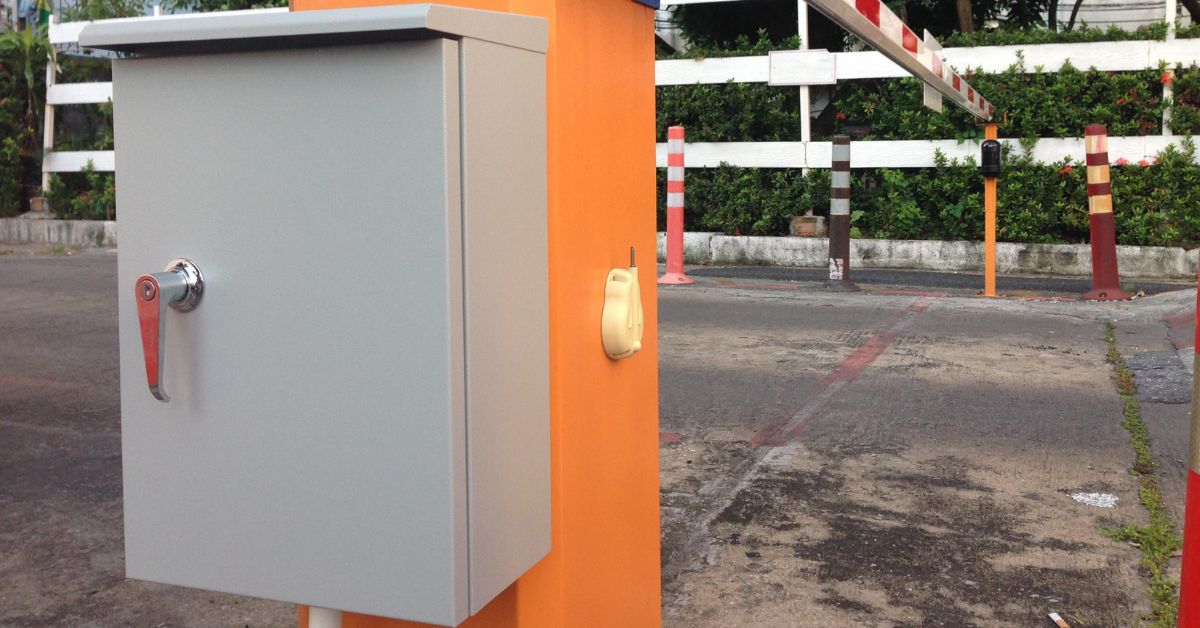
an enclosure on a parking garage gate

Improved parking garage organization

If you’re looking to improve the organization of your parking lot or garage, look no further than new self-paying kiosks. With a stall in place, parking operators can easily track which spots are occupied and which are available. Modern kiosks can be programmed with the exact number of locations in a particular garage. With this data in hand, it can alert the operator when the lot is almost out of space so they can proactively close it once it’s complete. Knowing this data helps reduce congestion and ensures drivers can easily find an open parking spot.

Enhanced security

Many parking garages or lots kiosks allow you to add equipment, including cameras. Adding a camera to your self-paying booth, it will help to deter criminal activity when in your parking structure. The cameras monitor the area, meaning you can remotely watch your lot to ensure your customers and their vehicles are safe and secure. The automated payment process also means less cash on hand, reducing the theft risk.

Customizable options

Finally, self-paying kiosks can be customized to fit the specific needs of a parking garage. For example, some stalls will accept various payment options, including cash, credit cards, and mobile payments. Others may be equipped with additional features like touchscreens or audio instructions to make the payment more user-friendly.

Bonus – 24/7 operation!

A self-paying kiosk allows your parking structure to be valuable all night long. When something is self-paying, you do not require an attendant to take money or keep inventory available on the spot. Instead, the kiosks operate independently, accepting cash or card payments all the time. Having something work 24/7 allows you to make money even when you aren’t there.

Every parking garage or lot can benefit from a self-paying kiosk. They provide convenience for drivers, increased revenue for parking operators, improved garage organization, enhanced security, and offer customizable options to fit specific needs. With these benefits in mind, it’s easy to see why self-paying kiosks are becoming a standard feature in nationwide parking garages. Let Accurate Metal Fab help you with your next self-paying parking kiosk. We are a full-shop fabrication shop and can handle your OEM fabricating needs. Start a conversation with us today by sending us a quote!

Metal Junction Boxes: The Ultimate Guide

Post Image
Image
Metal Junction Boxes

Metal junction boxes are an essential electrical system component, serving as the central point for connecting and shielding electrical wires. Whether you're an electrician or an OEM, understanding junction boxes is crucial to knowing how your machinery is powered. This guide will explore everything you need to know about metal junction boxes, from their types and functions to installation tips and best practices.

What are junction boxes?

Junction boxes, also known as terminal boxes or conduit boxes, are enclosed containers that connect and protect electrical wires. They typically consist of a metal enclosure, a cover, and one or more knockouts or conduit entries for wiring. Depending on the electrical installation's needs, metal junction boxes are often installed on walls, ceilings, or floors. In addition, these enclosures supply electrical current to portable generators, among other things.

Are there several types of electrical boxes manufactured from metal?

  • Electrical boxes: Made of sturdy metal, such as carbon steel, these boxes are suitable for outdoor and industrial applications, including HVAC units, portable generators, and large refrigerators.
  • Waterproof junction boxes: These boxes, designed from aluminum to resist moisture, dust, and other environmental factors, are ideal for outdoor and wet locations.
  • Explosion-proof electrical boxes: These heavy-duty boxes prevent the ignition of explosive gases, vapors, or dust. These boxes are essential for hazardous locations, such as chemical plants and refineries, and are designed to withstand even extreme conditions.

What are the functions of conduit boxes?

Conduit boxes serve several critical functions in electrical installations, including:

  • Connecting wires: Conduit boxes provide a central point for connecting wires from different circuits or devices, such as switches, outlets, or light fixtures.
  • Protecting wires: Boxes are constructed to protect against damage, such as abrasion, impact, or accidental contact.
  • Containing sparks: In case of a short circuit or electrical fault, a conduit box will have them and prevent further damage. This makes it safe for the essential workers in the field.
  • Facilitating maintenance: Junction boxes allow easy access to electrical connections and wiring, making troubleshooting or repairing electrical problems a breeze.

How do you install terminal boxes?

Proper installation of terminal boxes is crucial to ensuring everyone is safe and that the metal box delivers the correct power level to whatever it powers. Here are some tips and best practices for installing junction boxes:

  1. Choose the right box type for your application based on the environment, load, and wire size.
  2. Install the box at the correct location, in accordance with the electrical code and the installation's requirements.
  3. Securely mount the box using screws, anchors, or other fasteners, depending on the substrate.
  4. Connect the wires correctly, following the wiring diagram and using wire nuts or other approved connectors.
  5. Cover the box with the appropriate cover plate based on the box type and the application's requirements.

Metal Is The Key To Electrifying Your World

Without metal, most of us could not efficiently power the world around us. That's why metal junction boxes are essential to any electrical system. They provide a safe and reliable way to connect electrical wires and protect them from individuals and the environment. Metal junction boxes are a critical part of any OEM application. At Accurate Metal Fab, we are here to partner with you to help you fabricate almost anything - including metal electrical boxes. Please feel free to reach out to us today for a free quote.

Contact Us

Why Powder Coating is Ideal for Outdoor Equipment and Machinery

Post Image
Image
Powder Coating Panels Beige

Powder coating is a durable, long-lasting finish for outdoor equipment and machinery. Unlike traditional paint finishes, powder coating provides superior protection against the harsh elements and weather conditions that outdoor gear is exposed to daily. Here are some reasons powder coating is ideal for outdoor equipment and machinery.

Powder Coating Durability

Powder coating is incredibly durable and resistant to chipping, fading, and peeling. Why do you ask? The material used, typically metal or steel, can often be oily or grimy. To prepare the surface, each part on a powder-coating paint line undergoes a multi-stage wash and fully dries before the powder is applied and baked on. Then, the powder itself contains additives that make the metal more durable than it would be without paint. This application creates a strong bond with the steel, ensuring it can withstand the harsh outdoor environments it will experience.

Image
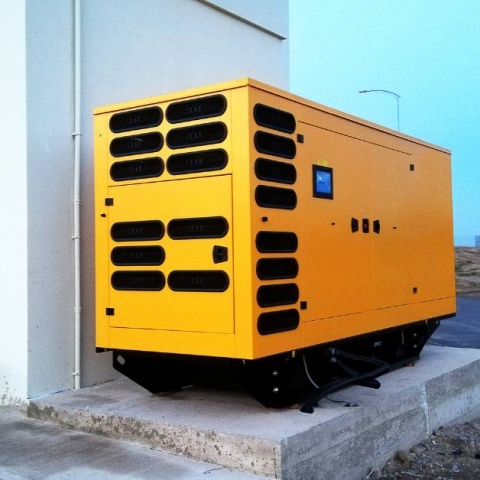
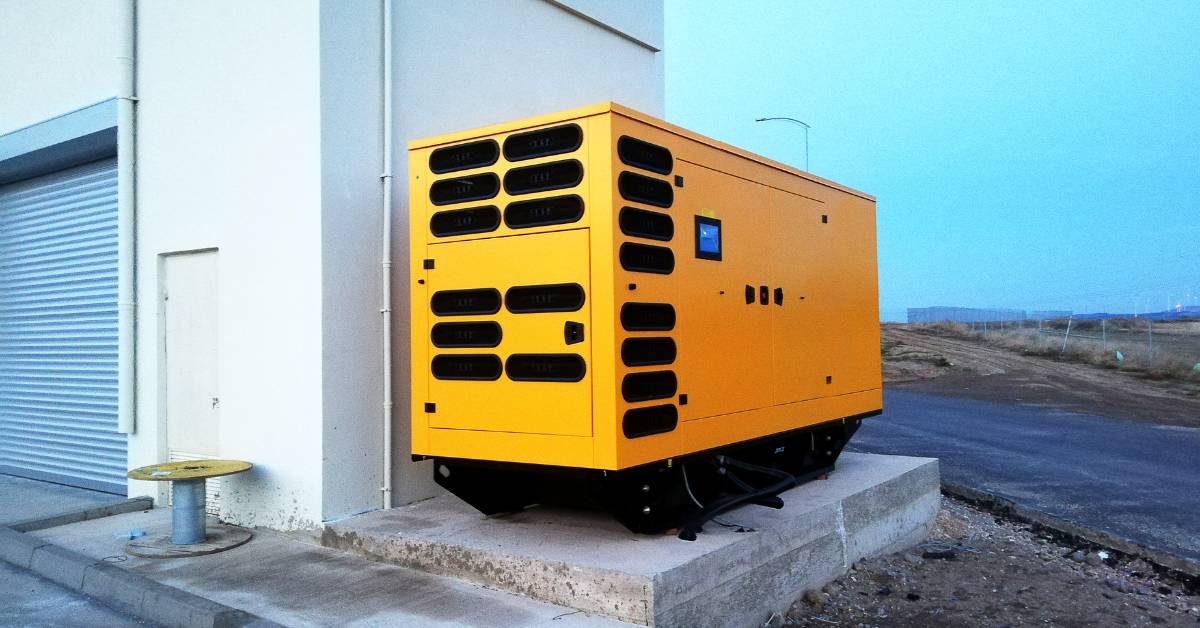
Power generator painted yellow

Corrosion Resistance For Outdoor Equipment

Powder coating is also highly corrosion-resistant, a common challenge for outdoor equipment exposed to moisture and other environmental factors. When the powder is applied during spraying, it proceeds along the line through an open oven, which is heated to 450 degrees. As a result of this application process, the coating forms a protective layer on the equipment's surface. This process helps to prevent rust and other forms of corrosion from forming. Since outdoor equipment is exposed to various weather conditions, such as rain, snow, and sunlight, ensuring your parts and equipment survive in the elements for years is a top priority.

Powder Coating Aesthetic Appeal

Look at any car on the road; you've seen powder coating and how beautiful it looks. It can glisten in the sunlight and look good for years and years. In fact, some powders undergo rigorous quality control, including salt spray tests, to ensure the coating withstands weather exposure. AAMA 2603, 2604, and 2605 are powders designed and tested to last as long as your equipment. Powder coating also offers a wide range of color options and finishes, which allows you to customize the appearance of your outdoor gear and machinery. Powder manufacturers can often match a specific color when provided with a PMS or RAL color code. Color matching can ensure your brand shines through on the equipment. It helps your items to stand out and be easily identifiable. Think of that John Deere green – it's classic, and everyone knows it.

Environmental Benefits

Image
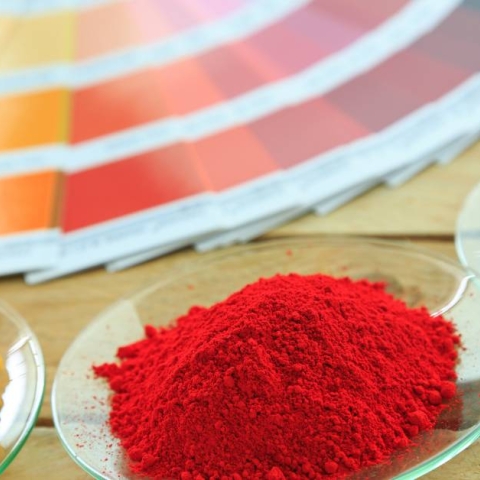
Different Powders

Powder coating is also an environmentally friendly finishing option. Unlike traditional paint finishes, powder coating does not contain solvents or other harmful chemicals, making it a safer and more sustainable choice for businesses committed to reducing their environmental impact. Because of the powder process, any powder not applied during the initial coating is captured, filtered, and then recycled back into the powder station. Using only the paint you need saves money and keeps potentially toxic waste out of the trash—helping support your sustainability initiatives.

Powder coating is ideal for outdoor equipment and machinery due to its durability, weather and corrosion resistance, aesthetic appeal, and environmental benefits. If you own or operate outdoor equipment, powder coating is an investment that provides long-lasting protection and helps your equipment look excellent for years to come. Accurate Metal Fab has a new, state-of-the-art powder-coating line to coat your outdoor gear. Please share your needs using our quote form today to start the conversation.
 

Five Powder Coating Advantages For Metal Surfaces

Post Image
Image
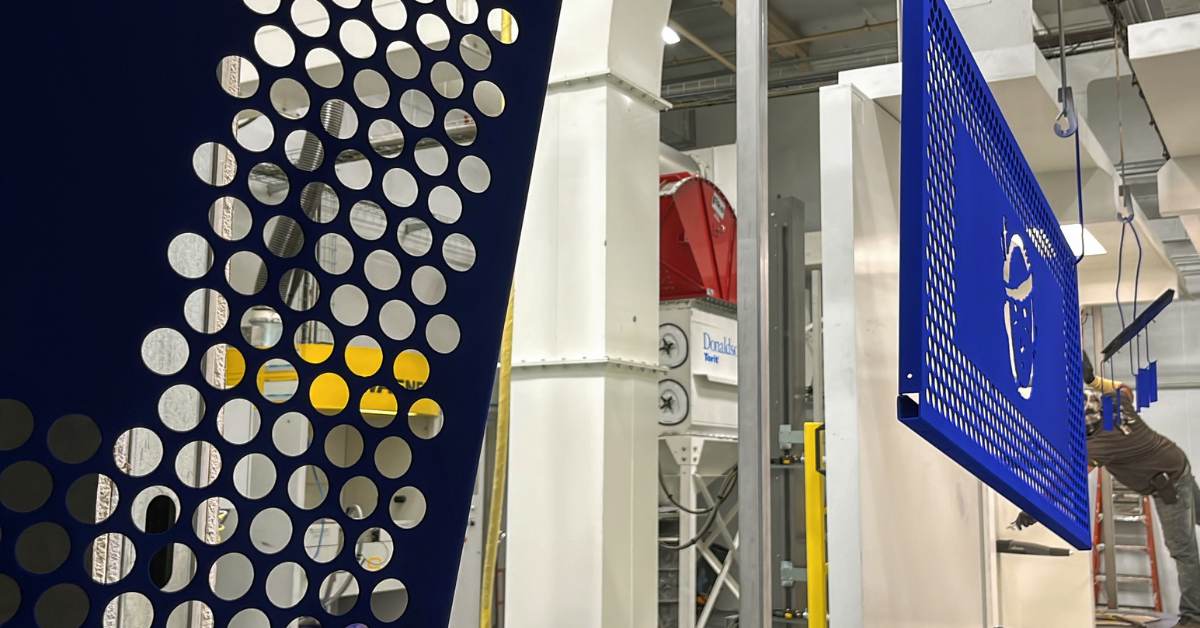
Powder Coating blue perforated panels

Powder coating offers significant advantages for protecting and enhancing metal parts. More durable than liquid paint, it creates a finish that resists wear, weather, and corrosion while allowing flexibility in color and texture. For OEMs, architects, and product designers, the powder coating advantages come down to performance, consistency, and long-term value.

In this article, we'll explore five key advantages of powder coating that extend product life, improve finish quality, and reduce long-term maintenance costs.

1. Durability

A properly cured powder coat resists chipping, cracking, peeling, fading, and corrosion. For exterior and high-demand projects, finishes that meet AAMA 2604/2605 standards deliver proven performance in terms of humidity, salt-spray resistance, color retention, gloss, and chalk resistance. This makes powder coating ideal for outdoor equipment, architectural elements, and enclosures.

Image
perforated

2. Versatility

Powder coating is suitable for use on steel, aluminum, and other standard alloys. You can specify brand-true colors using RAL or Pantone matching and select textures ranging from smooth to matte to fine-structured. This flexibility supports both decorative and functional applications, including POP displays, cable-management racks, and perforated architectural facades.

Image
Power generator painted yellow

3. Environmentally Friendly

Powder coating contains no VOCs and is engineered for material recovery, with overspray reclaimed and reused. Surface prep water is treated and recycled to maintain the proper chemical balance, supporting consistent adhesion and finish quality while minimizing environmental impact.

4. Cost-Effective

Continuous lines and fast changeover enable efficient runs once parts are fixtured, helping you control application time and total cost. Because powder-coated parts last longer and require less frequent refinishing, you also reduce maintenance and downtime over the equipment's life.

5. Consistency

The electrostatic charge attracts powder to the substrate, providing even, wrap-around coverage and a smooth, drip-free film after curing. With in-line quality checks and process controls, you get repeatable color and gloss from lot to lot, which is critical for multi-site programs and long-running SKUs.

BONUS! Ease of Maintenance

Powder-coated metal surfaces are easy to clean and maintain. The metal is scratch- and stain-resistant and can be cleaned with mild soap and water.

What Powder Coating Advantages Does Accurate Have?

  • AAMA 2604/2605 capable finishes for demanding environments

  • 5-stage wash pretreatment for adhesion and corrosion protection

  • Color matching via RAL or Pantone

  • All standard powder chemistries, including epoxy, polyester, and zinc-rich primer

  • Part capacity up to 4' W × 6' H × 10' L, 400 lb with automated line application and in-process quality control

Ready to Extend the Life and Look of Your Metal Parts?

The advantages of powder coating are clear: durability, versatility, environmental benefits, cost savings, consistency, and easy maintenance. At Accurate Metal Fabricating, we combine precision fabrication with advanced powder coating to deliver finishes that not only look great but also perform.

Contact Accurate Metal Fabricating today to discuss your next project and see the difference a high-quality finish can make.

Project All-Stars

Post Image
Image
Project Managers Hanging Out

Project managers tend to get a bad rap. To many, they are the "Big Brother or Sister" constantly checking up on your work to ensure you hit specific milestones from dream to reality. But without a project manager, a customer's project would never make it out of a shop on time! So, thankfully, we have project managers who can be the "bad guys" and keep everyone accountable for their specific tasks.

Image
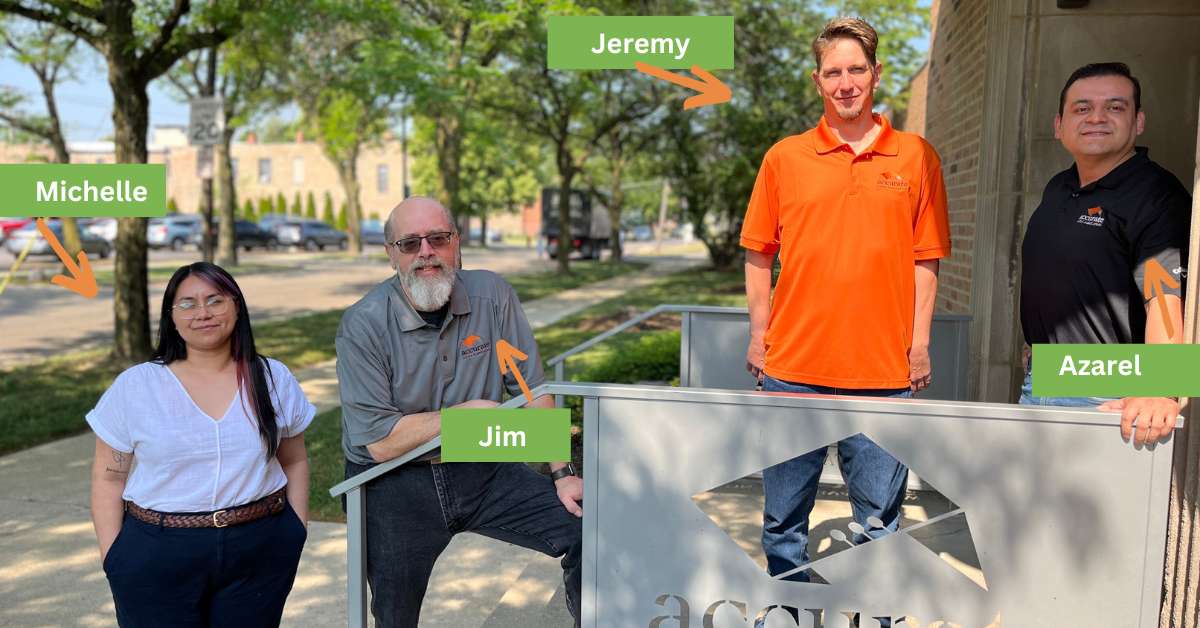
Project Manager Azarel

Respect Everyone

We are lucky here at AMF – we have four of the best project managers who somehow keep jobs flowing through our metal shop and ensure they are on time to the customer. What's unique about us is that we do it in a way that doesn't disrupt the other teams here. "There is always a sense of respect and understanding when we communicate with each other," said Azarel Paredes. Azarel has been with the company for 13 years, starting as a forklift operator and working his way up to project manager. "Because we respect the people doing the jobs, it has led to our success as project managers at AMF." Jeremy McLean agrees. "I have been personally into metal working for a long time as I make and weld various items in my own time. Because I know how tough the work is, I can relate to everyone here at AMF". Jeremy came to AMF 7 years ago after working in the electronics industry for over a dozen years. "We really do get into the minutia of each hole, bend, weld, and piece of hardware that makes up a part. Examining the smallest details makes a big difference to the final product."

Collaboration Matters

Image
Jim S - project vet

Because they must keep orders on track to meet tight deadlines, project managers are constantly moving and interacting with everyone. "The ability to interact with so many people - people on the floor, QC, and management," says Jim Suffern, one of the newest AMF project management team members. "Each person and department brings a different perspective to a part or project we are working on. Because of this, we uncover new ideas for how to make something better for the customer." Jim is no stranger to project management. He worked for 40 years at Marvel Manufacturing, which AMF acquired in 2021, and the acquisition immediately impacted the organization. Jim now focuses his time on many of our special projects and mentoring the next generation of project managers. "I'm an Eagle Scout, and mentoring is a big part of that. And I love mentoring our team. But it's not just mentoring – I've been learning as much from the team as they have been from me."

Image
michelle - new kid

New Kid On The Block

As Accurate has grown over the years, it needs to bring on new people. As a family-owned and operated company, we always look to our internal team to promote from within before looking outside. Azarel and Jeremy started with a different job before moving into project management. And so did the "New Kid on the Block," Michelle Funes. Michelle began working on the assembly line five years ago, where she developed a passion for metal. "I loved seeing how we took just a boring flat sheet of metal and transformed it into an actual product." Although she's the new kid on the team, moving up in the company from assembly to operating press brakes to quality control has taught Michelle a thing or two about her current project manager role – and how to get things done. "Where I worked in so many departments, I know almost everyone. It's easy for me to estimate how long a job will take because I've done it myself. And now, I communicate with everyone so everyone knows where a project is at all times."

Image
jeremy all star

The Project All-Stars

Because they have to interact with everyone within AMF and our customers, the team must have fun and get along with everyone. Some in the company even call them "The Project All-Stars" because they consistently perform at an elite level and elevate the performance of those around them. There are a lot of fun and funny moments working here," said Jeremy. "Everyone is great to be around, and we have a lot of camaraderie. One inside joke we have on the team is the squad helping me get my DeLorean restored. I want to make it into an electric car, so I have 5 or 6 Costco-size AA battery packs that magically appear on my desk at least once a month to help in my journey."

A Great Attitude Helps You Feel Accomplished

I may be biased, but our project managers are the best in the metal biz. And it has a lot to do with their attitude. They are always willing to help you and have a positive attitude. Whether cracking jokes or ensuring a stress-free production process, these Fab Four individuals ensure you are satisfied with the product you receive. "It is well known, but I love Mondays, and my favorite quote reads, Monday is like any other day. What makes it different is the content you fill it with. That is exactly how I feel every Monday morning," said Azarel. This attitude drives the entire project management team forward and keeps our customers' jobs flowing smoothly through the shop.

Image
Fun Squad

What Can You Powder Coat? Five Applications Made From Metal and Steel

Post Image
Image
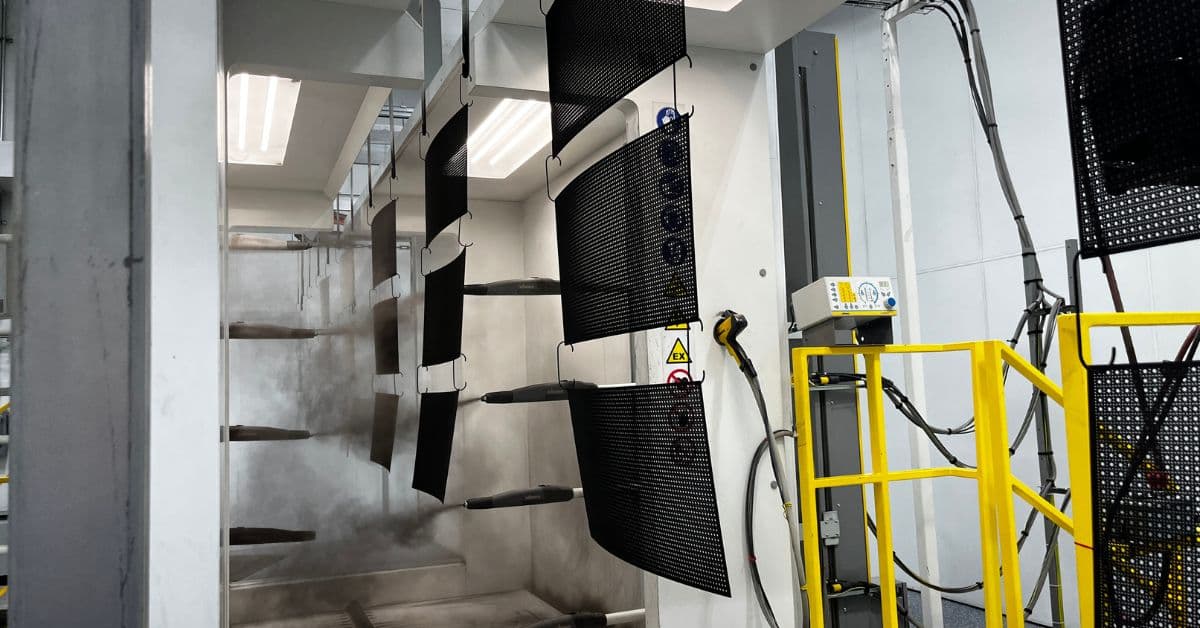
Perforated panels being painted black through a powder coating line

One of the most common questions we hear is simple: What can you powder coat? The answer: far more than most people realize. Powder coating is more than just a finish — it's a protective layer that extends the life of metal parts, enhances their appearance, and ensures they withstand real-world use.

At Accurate Metal Fabricating, we're a Chicago-based sheet metal fabricator with advanced powder coating capabilities. Our AAMA 2604- and 2605-compliant line provides your products with a long-lasting finish that resists chips, scratches, and corrosion. Let's explore some of the most common applications.

  1. Elevating Point-of-Purchase Displays: Powder coating has revolutionized retail displays, combining durability with visual appeal. From a custom storefront fixture to an experiential product launch, powder coating provides a resilient, high-quality finish that withstands customer interaction. While many POP displays are installed indoors, powder-coated surfaces are durable enough for outdoor use as well. As goods are stocked and removed, the finish continues to protect against wear — keeping the display looking sharp for years. For designers who want a personalized, eye-catching display, powder coating offers both strength and style.
  2. Transforming Architectural Elements: Architectural projects benefit greatly from powder coating's durability and versatility. Applications include exterior cladding, perforated metal panels, restaurant partitions, and signage — all of which demand both beauty and long-term performance. When paired with AAMA 2604 or 2605 compliance, powder coating delivers superior weather resistance and color retention. Architects and designers also gain creative freedom, with finishes tailored to exact colors and textures, resulting in striking designs that endure.
  3. Enhancing Metal Enclosures: Powder coating also makes a significant difference in metal enclosures. Used in applications such as ATMs, parking garage kiosks, and electrical housings, enclosures protect sensitive components — but only if they're properly finished. Left uncoated, enclosures can corrode quickly. Powder coating not only improves protection but also elevates the enclosure's appearance. A branded, professional finish signals quality, while the added durability helps extend the equipment's lifespan.
  4. Enhancing Industrial Equipment: Industrial equipment often operates in extreme conditions — from power generation facilities to data centers. Components like screens, guards, and wire harness racks are constantly exposed to impact, chemicals, and weather. Powder coating shields these parts with a harsh, UV- and corrosion-resistant finish. For OEMs, this means machinery that lasts longer, requires less maintenance, and maintains a professional appearance even under demanding conditions.
  5. Beautifying Outdoor Elements: Public spaces rely on durable, attractive fixtures, including modular fencing, bike racks, playground structures, benches, and sports equipment. Powder coating enhances these products with a vibrant, weather-resistant finish. The protective coating ensures that outdoor structures maintain their appearance despite heavy use and exposure to the elements. For municipalities, parks, and schools, powder coating reduces long-term costs while creating inviting, functional spaces.

Now That You Know What You Can Powder Coat – What's Next?

The applications of powder coating are virtually limitless. Whether you're working in retail, architecture, or industrial manufacturing, powder coating is an ideal choice for extending product life and creating a polished, professional appearance. At Accurate Metal Fabricating, we combine precision fabrication with powder coating to deliver finishes that not only look great but also perform well. Ready to explore how powder coating can elevate your next project? Contact us today.

Contact Us

Second Quarter Happenings

Post Image
Image
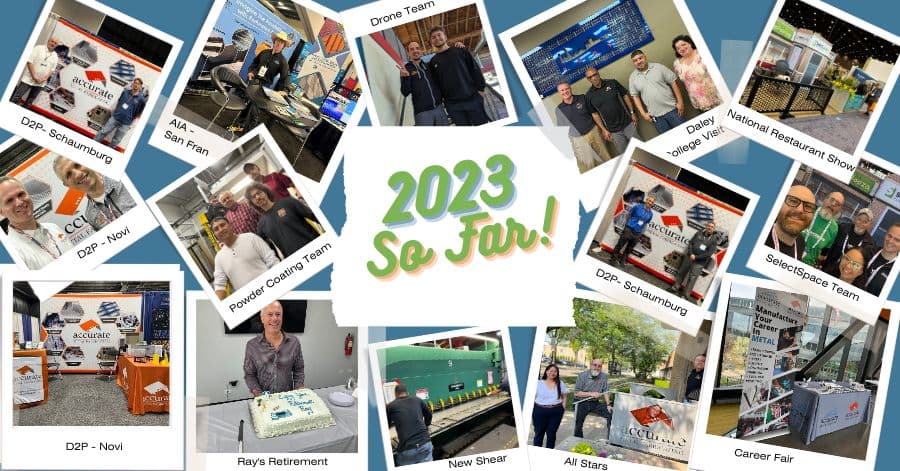
Quarter Two 2023 Recap Collage

You miss a little – you miss a lot!

Much like we continue to punch holes into metal at Accurate Perforating or hang various parts on the paint line at Accurate Metal Fab, we do many different things between the Accurate Family of Companies. And sometimes, you might miss one of those events! Instead, let's look at all the fun we had in the second quarter of 2023!

April 11 – 12

We had a big day at both Accurate Metal Fab and Accurate Perforating. The crew from Indoor Drone Tours was out to begin filming our location. Over two days and almost 16 hours of filming, we captured our whole operation – and now, we are working on condensing it to 2 and a half minutes!

April 19

Accurate hit the college community college circuit to recruit the next generation of METAL mavens. We were at Daley College and Morton College, where we met many excellent students and professors interested in our industry.

May 4

May 4 was a day of celebration! Long-time team member Ray Meinsen sailed into retirement. He retired in December of 2022 to escape the cold Chicago winter but returned in May for a final farewell and celebration with everyone!

May 11

Our powder-coating paint line was featured in Finishing and Coating Magazine in May. If you have yet to see the great article written by Tim Pennington, check it out here! And, May 4, BE With You

May 17 – 18

We made the tradeshow circuit starting with D2P in Schaumburg, IL, in May and June. D2P is a design and contract manufacturing tradeshow that connects engineers, purchasing managers, and more with current and future suppliers. Accurate Metal Fab was there and had a chance to catch up with old faces and meet new ones at D2P!

May 20 – 23

Right after we finished with D2P, SelectSpace went off to McCormick Place in Chicago, IL, for the National Restaurant Show! It was four days of food, fun, and fencing. We debuted our newest product, The Essential Partition, to restaurant owners across North America!

June 6

On Tuesday, June 6, professors Charles and Juan from Daley College visited Accurate Metal Fab to understand our capabilities. Our budding partnership will help the college place students into jobs in the metal fabrication industry, such as ours.

Image
Cowboy Chris

June 8

Accurate Perforating went west from Chicago to the AIA Conference in San Franciso, CA, on June 8th and 9th. The conference is geared towards architects, engineers, and construction professionals interested in the latest products and services in the industry. On top of that, architects and engineers can earn Continuing Education Credits. Did you miss getting credits? Don't worry – our course on Designing With Perforated Metal is available on demand at AEC Daily whenever you need some hours!

June 9

On June 9, we had a mini photoshoot with our project managers, who were featured in one of our June blogs. Each of them certainly enjoyed letting the world know who they were and how they can project manage your next job!

June 14 – 15

Accurate Metal Fab went on the road to the Detroit area – Novi, MI, to be exact. This was the first time the D2P tradeshow was in the market, and we found it to be a valuable show and market for us to be at.

June 20

Over at Accurate Perforating, the newest member of our family, the Cincinnati Shear, got a fresh coat of paint and is actively processing perforated metal for all of our customers!

When you miss a little, you do miss a lot. If you don't want to miss any of the action, follow all of the Accurate Family of Companies across social media. And we are here when you need us!

Request A Quote

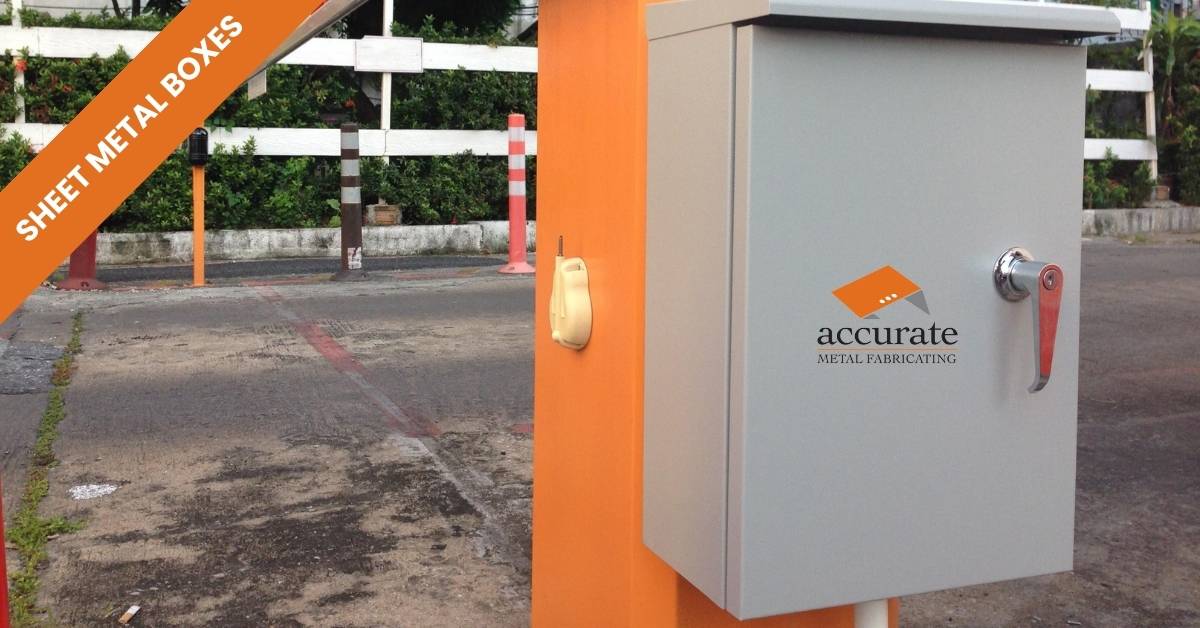
Sheet Metal Boxes

Post Image
Image
Sheet Metal Boxes Header
Sheet metal boxes play a critical role across a wide range of industries. From protecting sensitive electronics to supporting industrial operations, these enclosures provide durability, flexibility, and long-term value. When properly designed and fabricated, sheet metal boxes offer a reliable solution for housing equipment, managing airflow, and maintaining safety standards.
In this article, we'll explore what sheet metal boxes are, where they are commonly used, and why partnering with an experienced fabricator like Accurate Metal Fabricating matters.

Understanding Sheet Metal Boxes

Sheet metal boxes are enclosures formed from flat metal sheets that are cut, formed, and welded into a box-like structure. Common materials include carbon steel, stainless steel, and aluminum. The material selection depends on the application, environment, and performance requirements.
These enclosures are formed to tight tolerances using press brakes and precision welding. The result is a rigid, dependable structure that can be customized in size, shape, and configuration. Because of their versatility, sheet metal boxes are used in both indoor and outdoor applications across many industries.

Common Applications of Sheet Metal Boxes

Sheet metal boxes are used wherever protection, organization, and durability are required. Below are several common applications where these enclosures play an essential role.

Industrial and Manufacturing Equipment

In industrial environments, sheet metal boxes are used to house electrical components, control panels, machinery interfaces, and automation equipment. These enclosures protect internal components from dust, debris, moisture, and accidental contact while enabling safe, organized operations.

Electronics and Technology

Electronics manufacturers rely on sheet-metal enclosures to shield sensitive components from electromagnetic interference and heat buildup. Properly designed enclosures use perforated metal to manage airflow and improve thermal performance, especially for continuously operating equipment.

Automotive and Transportation

Sheet metal boxes are widely used in automotive service and manufacturing environments. Tool storage cabinets, battery enclosures, and electronic system housings all benefit from the strength and durability of metal enclosures. Many are designed for mobility, allowing technicians easy access during service and maintenance.

Data Centers and IT Infrastructure

Data centers rely on sheet-metal boxes to house servers, power systems, and network equipment. These enclosures are often designed with expanded metal to promote airflow and cooling. Proper enclosure design helps protect equipment while supporting reliable, uninterrupted operation.

Receptacles and Public Infrastructure

Sheet metal boxes are commonly used as receptacles for waste, recycling, and specialized disposal applications. These enclosures can be designed with locking mechanisms, weather resistance, and decorative finishes for both indoor and outdoor environments. Electrical junction boxes are another critical application, providing safe and reliable access to power distribution.

Benefits of Sheet Metal Boxes

Sheet metal boxes offer several advantages that make them a preferred choice across industries.

Durability and Strength

Metal enclosures are built to withstand demanding environments. High-quality materials, combined with precision fabrication, produce sheet metal boxes that resist impact, corrosion, and long-term wear.

Customization and Flexibility

Sheet metal boxes can be tailored to meet specific requirements. Dimensions, cutouts, access points, mounting features, and finishes can all be customized to support unique applications.

Cost-Effective Production

Compared to alternative materials such as plastic or fiberglass, sheet metal boxes offer an efficient balance of performance and cost. Scalable fabrication processes and material recyclability help control long-term expenses.

Sustainability and Recyclability

Steel and aluminum are fully recyclable materials. When sheet metal boxes reach the end of their service life, the material can be reused, supporting sustainability goals and reducing environmental impact.

Why Accurate Metal Fabricating for Sheet Metal Boxes

Choosing the right fabrication partner is just as important as choosing the right enclosure design. Accurate Metal Fabricating brings decades of experience and a full-service approach to sheet metal box fabrication.

Experience You Can Rely On

With more than 80 years of experience, our team understands the performance requirements and standards across a wide range of industries. We work closely with customers to ensure each enclosure meets functional, structural, and aesthetic expectations.

Advanced Fabrication Capabilities

Our Cicero, Illinois, facility is equipped with modern fabrication technology, including precision laser cutting, forming, welding, and in-house powder coating. This allows us to deliver high-quality sheet metal boxes with consistent results.

Integrated, Full-Service Support

From initial design review through fabrication, finishing, and delivery, we provide a streamlined process under one roof. Our centralized location also supports efficient material sourcing and nationwide shipping through just-in-time programs.

A Reliable Partner for Sheet Metal Boxes

Sheet metal boxes offer security, customization, and long-term value across industrial, commercial, and technology-driven applications. When fabricated with precision and supported by the right partner, these enclosures perform reliably in even the most demanding environments.
If you are designing or sourcing sheet metal boxes for an upcoming project, Accurate Metal Fabricating is ready to help. Contact our team to discuss your application and explore a solution built to meet your exact requirements.

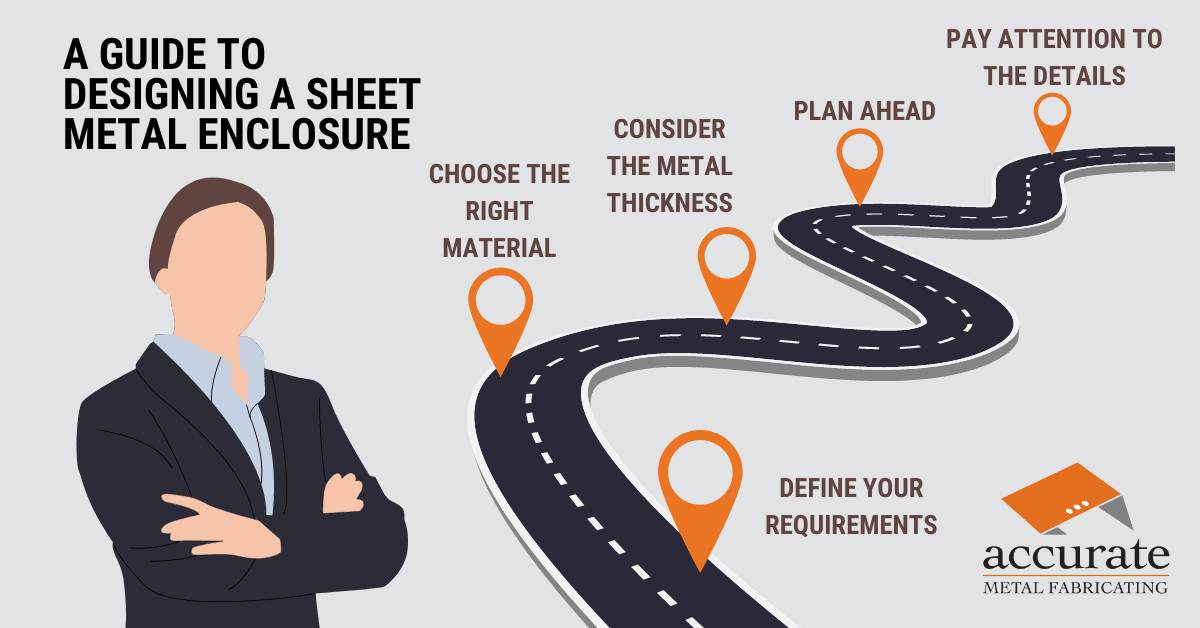
A Guide to Designing a Sheet Metal Enclosure

Post Image
Image
Metal Enclosure Infographic
Designing a sheet metal enclosure is about far more than creating a metal box. A successful enclosure must protect internal components, manage airflow, support installation and serviceability, and withstand real-world conditions over time. Each decision—from material selection to fabrication methods—directly affects performance, cost, and manufacturability.
At Accurate Metal Fabricating, we partner with OEMs and engineers throughout the process of designing a sheet metal enclosure, helping transform early concepts into production-ready solutions. This guide outlines the key considerations for reliable, efficient enclosure designs.

Step 1: Define the Application Requirements

Before beginning the design, clearly define the enclosure's requirements. Dimensions, internal components, access points, mounting requirements, and environmental exposure all influence the final design.
Enclosures used indoors may prioritize appearance and accessibility, while outdoor or industrial enclosures must account for moisture, temperature swings, vibration, or chemical exposure. Providing this information early helps your fabricator recommend the right materials and design features while avoiding costly changes later.

Step 2: Choose the Right Material

Material selection plays a significant role in enclosure performance and cost.
Carbon steel is commonly used for indoor applications due to its strength, affordability, and excellent paint adhesion. It is ideal when corrosion exposure is minimal, and a durable painted finish is desired.
Aluminum offers a strong strength-to-weight ratio and natural corrosion resistance, making it well-suited for portable enclosures and outdoor applications. While aluminum typically costs more than carbon steel, it allows for lighter designs without sacrificing performance.
Stainless steel provides superior corrosion resistance and a clean, professional appearance. It is often specified for harsh environments, public-facing installations, and applications requiring long-term durability. Although it incurs a higher material cost, stainless steel excels when reliability and appearance are critical.
A qualified fabricator can help weigh these trade-offs during the early stages of designing a sheet-metal enclosure.

Step 3: Consider Sheet Metal Thickness

Sheet metal thickness affects strength, rigidity, and overall weight. Thicker material increases durability but adds cost and weight, while thinner material reduces weight but may require additional reinforcement. Often, strength can be achieved through smart design rather than heavier material. Features such as bends, flanges, and formed returns allow thinner gauges to perform effectively while keeping the enclosure efficient and cost-conscious.
Image
plan for efficient manufacturing graphic

Step 4: Design for Manufacturability

Sheet metal enclosures are produced using processes such as laser cutting, punching, forming, welding, and assembly. Designing with these processes in mind helps control costs and lead times. Simpler bend patterns, consistent hole spacing, and reduced part counts improve manufacturability. During this phase, collaboration between engineering and fabrication teams is critical. Early feedback can prevent unnecessary complexity and streamline production.

Step 5: Incorporate Structural Features

Structural features strengthen an enclosure without adding excessive material. Flanges, ribs, gussets, and formed channels increase rigidity and help support internal components. Mounting rails or brackets can also be integrated to simplify installation and maintenance. These details are especially important when designing a sheet metal enclosure intended for frequent access or for heavy internal equipment.

Step 6: Plan for Ventilation and Thermal Management

Enclosures housing heat-generating equipment require proper airflow. Vent patterns, louvers, or perforated panels allow air to circulate and prevent overheating. In some cases, fans or conductive heat-dissipation features may be required. Thermal management should be addressed early in the design process, as retrofitting ventilation after fabrication can be costly and inefficient.

Step 7: Address Sealing and Gasketing

When an enclosure must resist dust, moisture, or air leakage, sealing becomes critical. Gasket channels, welded seams, and proper fastening methods help protect internal components and maintain reliability. Attention to sealing details ensures the enclosure performs consistently under pressure and in demanding environments.

Designing A Sheet Metal Enclosure with Accurate Metal Fabricating

Designing a sheet metal enclosure is most successful when engineering, fabrication, and finishing are integrated. Accurate Metal Fabricating offers in-house laser cutting, forming, welding, powder coating, and more. It is all supported by experienced project managers and engineers.
From concept to production, we help ensure your enclosure meets performance requirements, manufacturing standards, and delivery timelines.
Contact Accurate Metal Fabricating to start designing your next sheet metal enclosure with confidence.